NLV Pharos visiting London in September 2019. Pharos maintains shipping navigation marks around the Scottish coastline.
Merchant Navy Day 2025
On the UK’s first day of World War Two, 3rd September 1939, a ship called the Athenia was sunk 200 miles North West of Ireland by a German U-boat. The submarine fired two torpedoes into the liner, one of which hit the Athenia. It took 14 hours for the ship to sink beneath the waves.
The ship’s lifeboats had been launched and carried the survivors until rescue ships summoned by her radio distress call converged on the scene of the disaster. But even when within touching distance of safety, a large number were killed when the large ships collided with the small wooden lifeboats. In all, 117 people died.
The first day of war brought the first large scale casualties. The Merchant Navy would carry on through World War Two keeping the United Kingdom supplied from across the world with all it needed to resist the Axis powers and, eventually, win the war.
Merchant Navy Day
This then is the reason for 3rd September to be marked as Merchant Navy Day, with the famous Red Ensign being flown from public buildings. The Red Ensign, the symbol of the Merchant Navy, is flown from the stern of British merchant ships of all types from passenger liners to the biggest freight carriers.
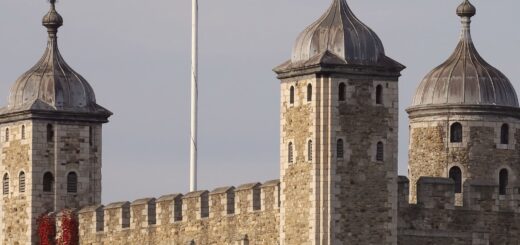
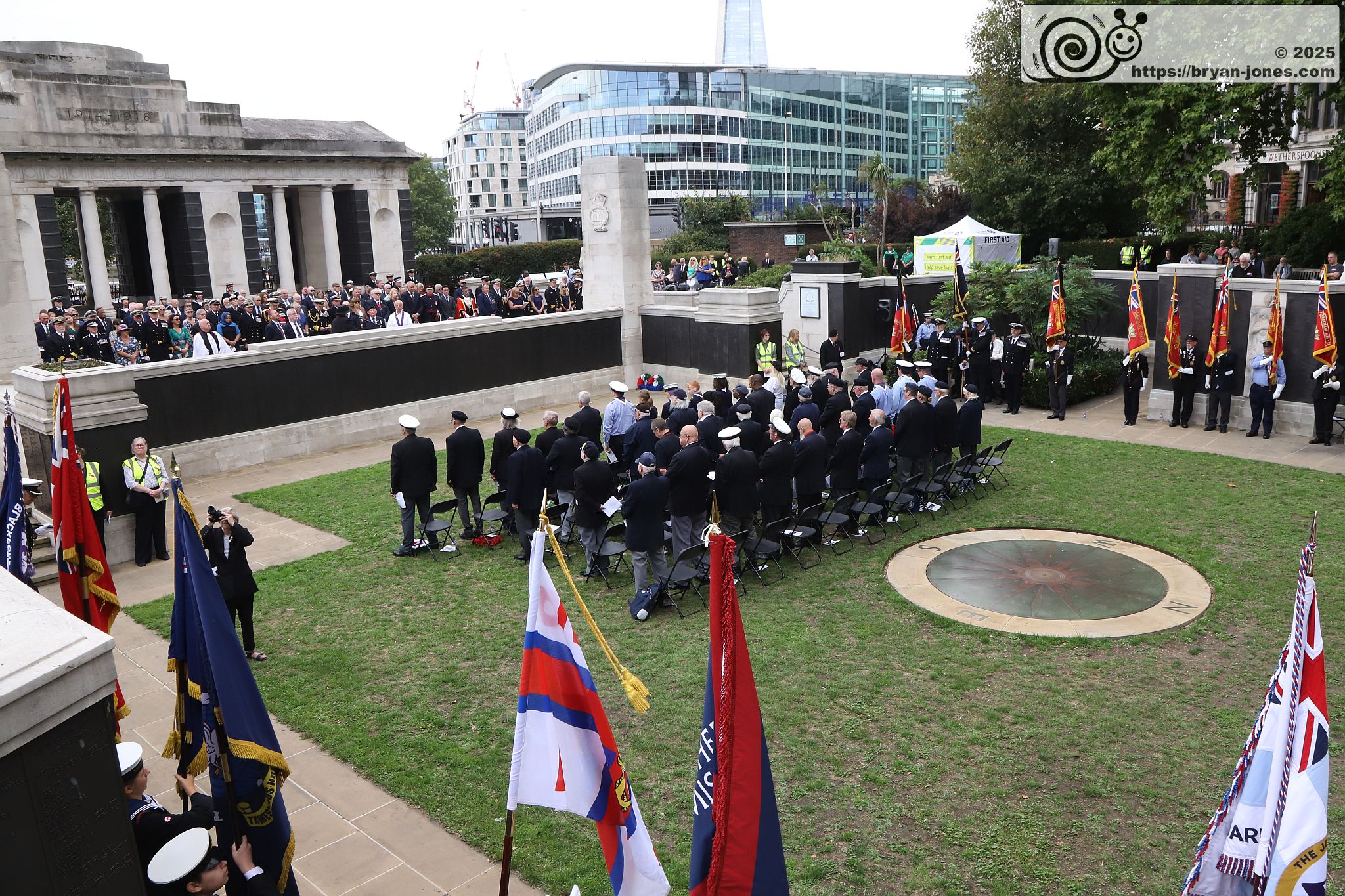
On a Sunday close to the date, the Merchant Navy Association holds a service to remember those lost in World War One, World War Two and the 1982 Falklands Conflict. Tower Hill in London, close to the Tower of London, is the location for the remembrance service with the old Port of London Authority building and the historic Trinity House providing an imposing backdrop.

Names
On the World War Two memorial alone, there are 23,895 names. That number though is “just” the crew who were lost on those ships. Civilians and military personnel killed in the same sinking are not listed on the Merchant Navy War Memorial.
CWGC
But that still doesn’t tell the whole story. The site is maintained by the Commonwealth War Graves Commission (CWGC) which is funded by the UK, Canadian, South African, Australian, New Zealand and Indian governments, reflecting the nationalities of those the commemorate. Lots of people memorialised by the CWGC were from what is now Pakistan, but when they served in WW2 it was prior to the Indian Partition of 1947.
One of the CWGC rules for commemoration is that every person may only be recorded once on all the memorial’s under their guardianship. If a Merchant Navy sailor has a grave, it will have a CWGC headstone which counts as the single record. Therefore, the 23,895 names listed on the WW2 Merchant Navy memorial at Tower Hill are only those who were lost at sea, their remains were not recovered to bury them in a graveyard. The sailors lost from the Indian Merchant Navy are recorded on a further memorial in Bombay.
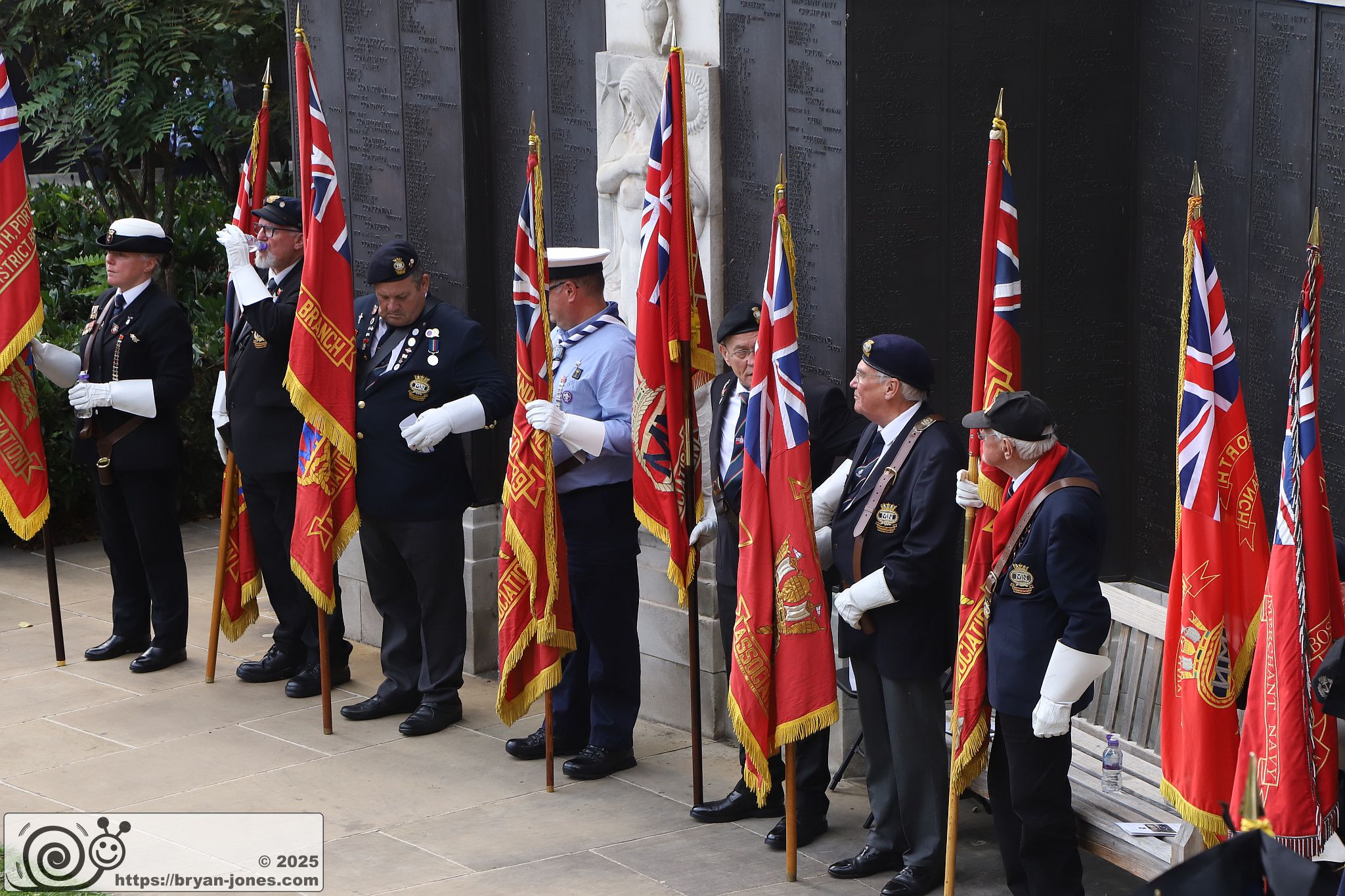
Under 18s
The youngest listed is Reg Earnshaw who was 14 years old. There are around 800 names on the walls of the war memorial which are known to of been under the age of 18 when they were killed. Whilst their age would of prevented them from serving in the military, in the Merchant Navy they served as cabin boys and cooks assistants without needing to lie about their age. The CWGC lists them as combatants as they served in the crew of ships which were at risk of attack at any moment.
Then it must also be remembered that the memorial only lists those who were killed, it can only hint at the numbers who were injured, many of whom’s lives were shortened by injuries received in their war service.
War Memorial Design
The First World War Memorial, built as a Greek pantheon, was originally called the Mercantile Marine War Memorial. Following World War One, the name Merchant Navy was endowed upon the Mercantile Marine by Royal command in recognition of the danger they had faced and their efforts to keep cargo flowing across the Atlantic Ocean and beyond. The First World War memorial was designed by Edwin Lutyens, well known for his many WW1 cemeteries and monuments found across the former battlefields.
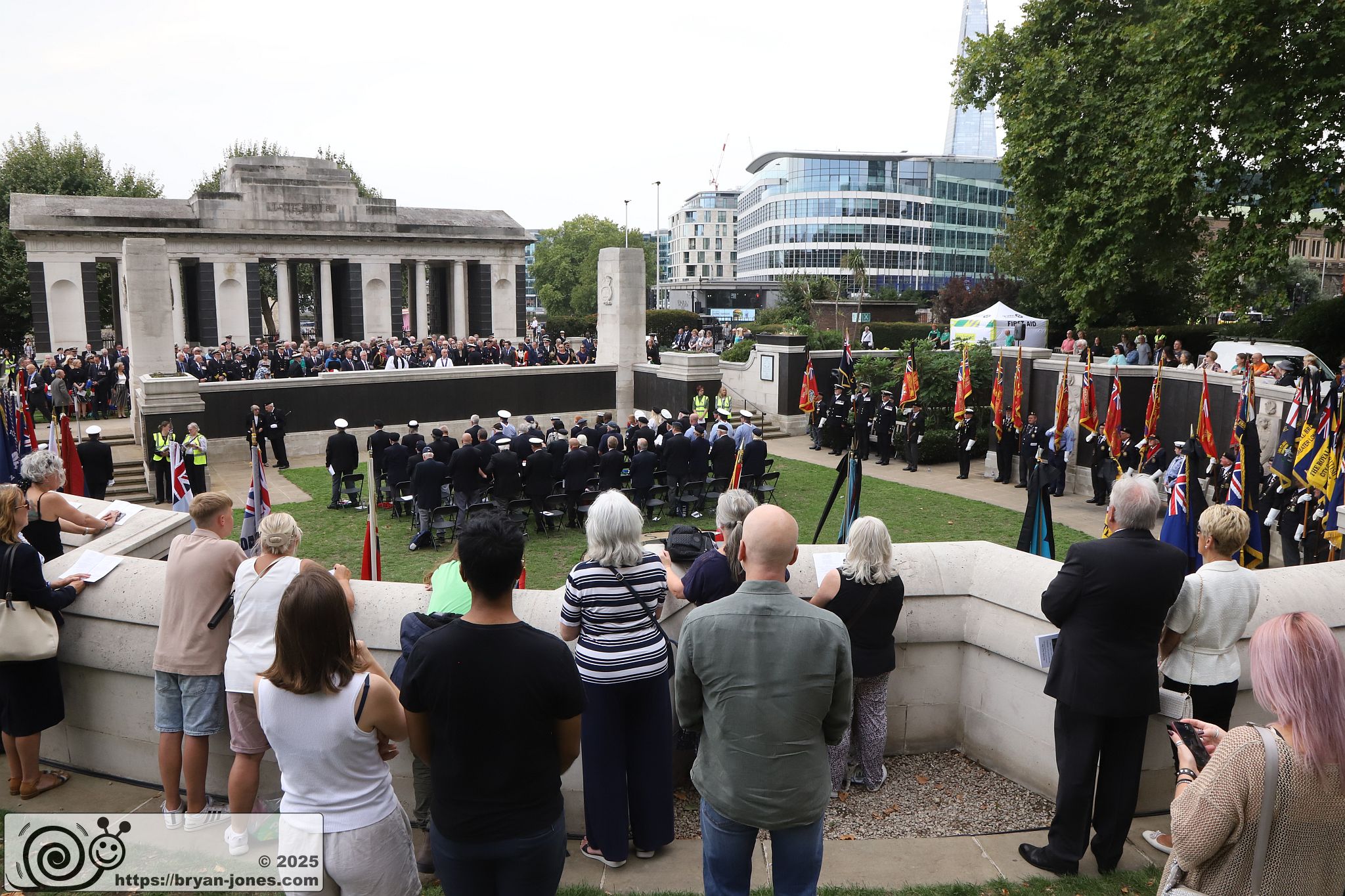
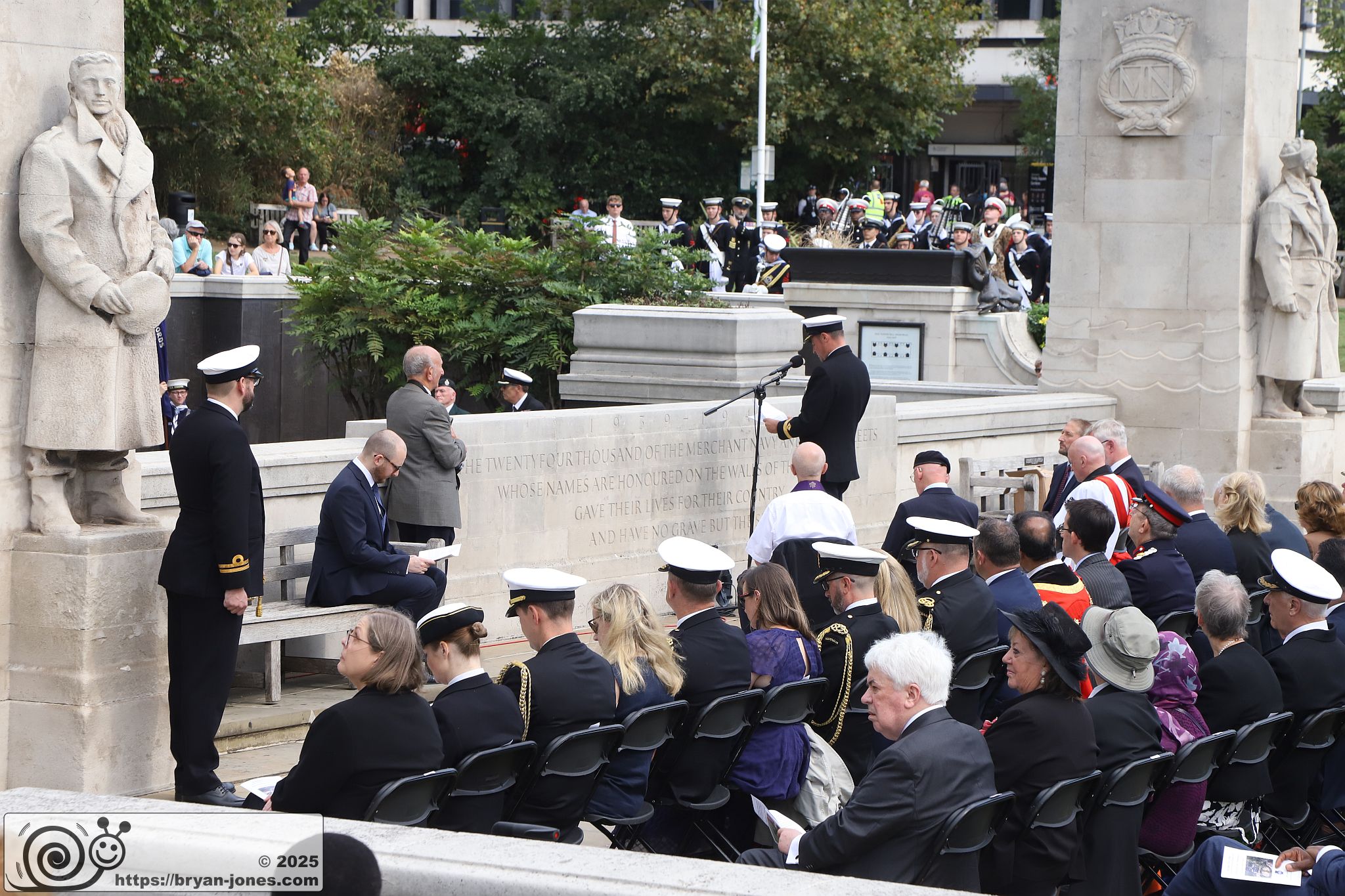
When looked down from above, the Southern part of the WW2 memorial looks like the outline of a ship with the bow (front) to the West and the stern (rear) to the East. A sailor, his long coat fastened with a length of rope, and an officer look out from the memorial on constant watch for approaching danger. The WW2 memorial is a sunken garden with an outline of waves carved into the stone. There are seven sculptures on the walls to represent the seven seas of the world then in the middle is a compass set into the floor.
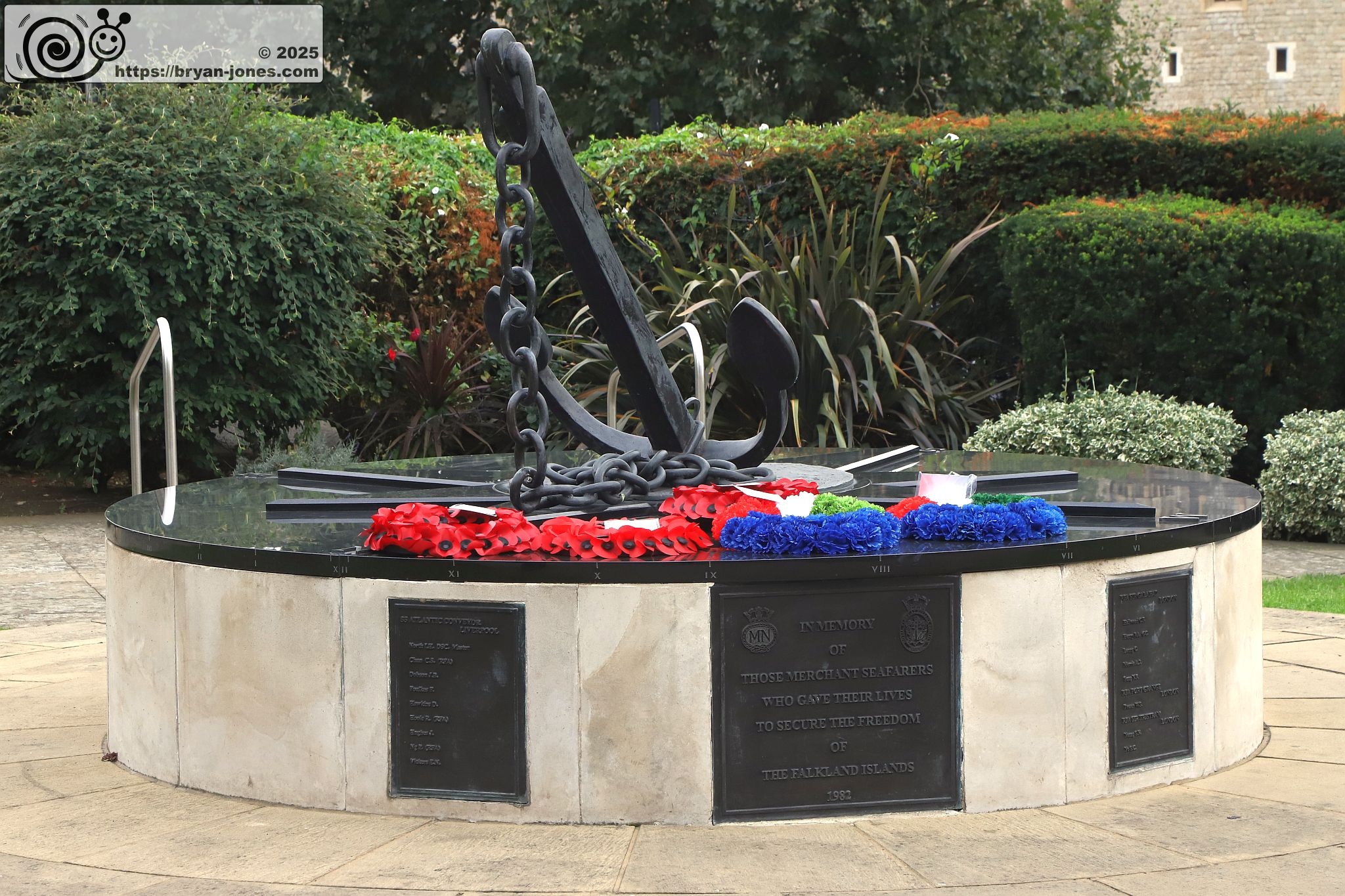
The 1982 Falklands Conflict memorial is also located in Trinity Gardens and features an anchor. The CWGC’s remit is focused on the casualties of World War One and Two, so the Falklands memorial is separately maintained.
Commemorative Service
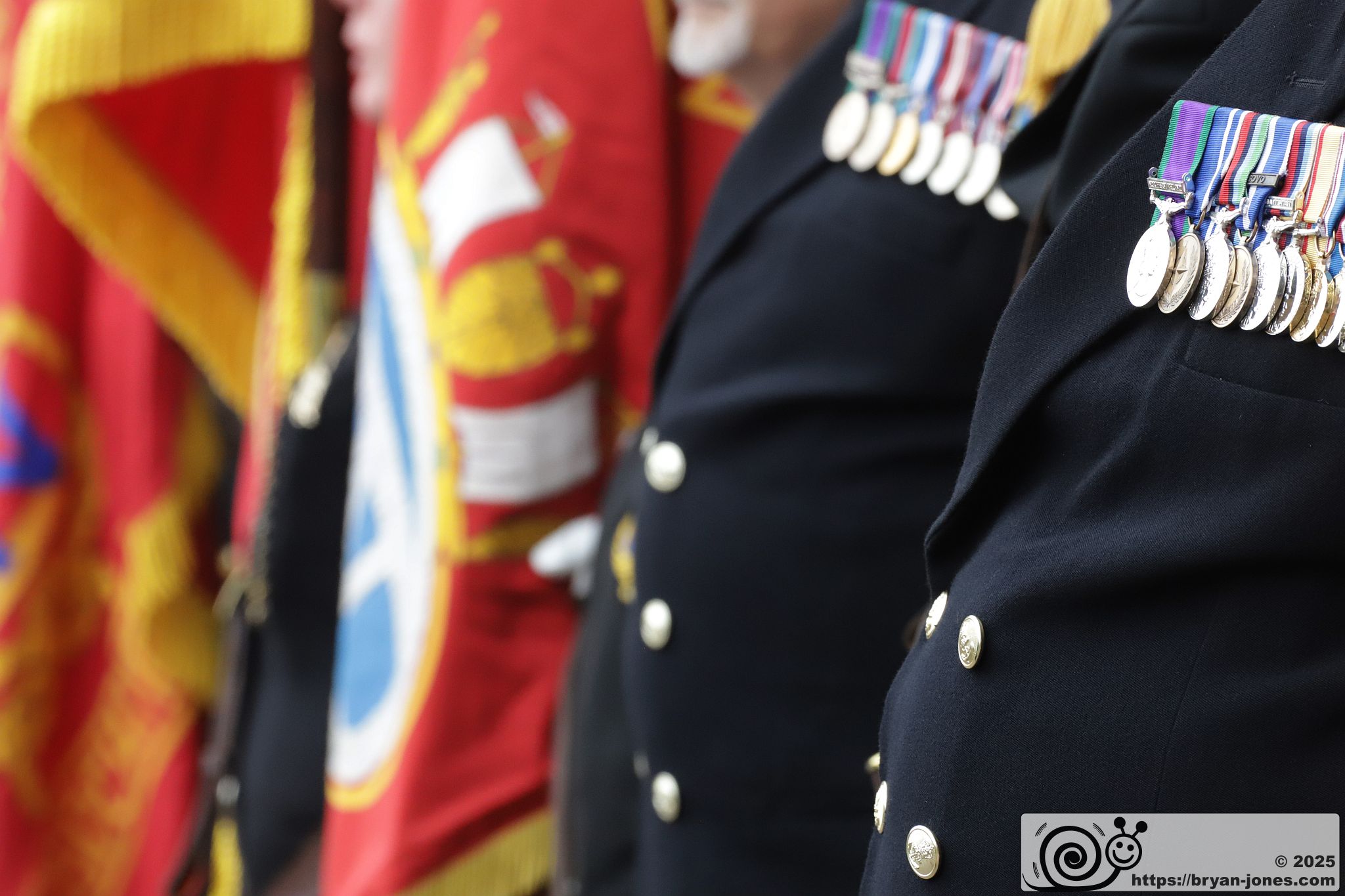
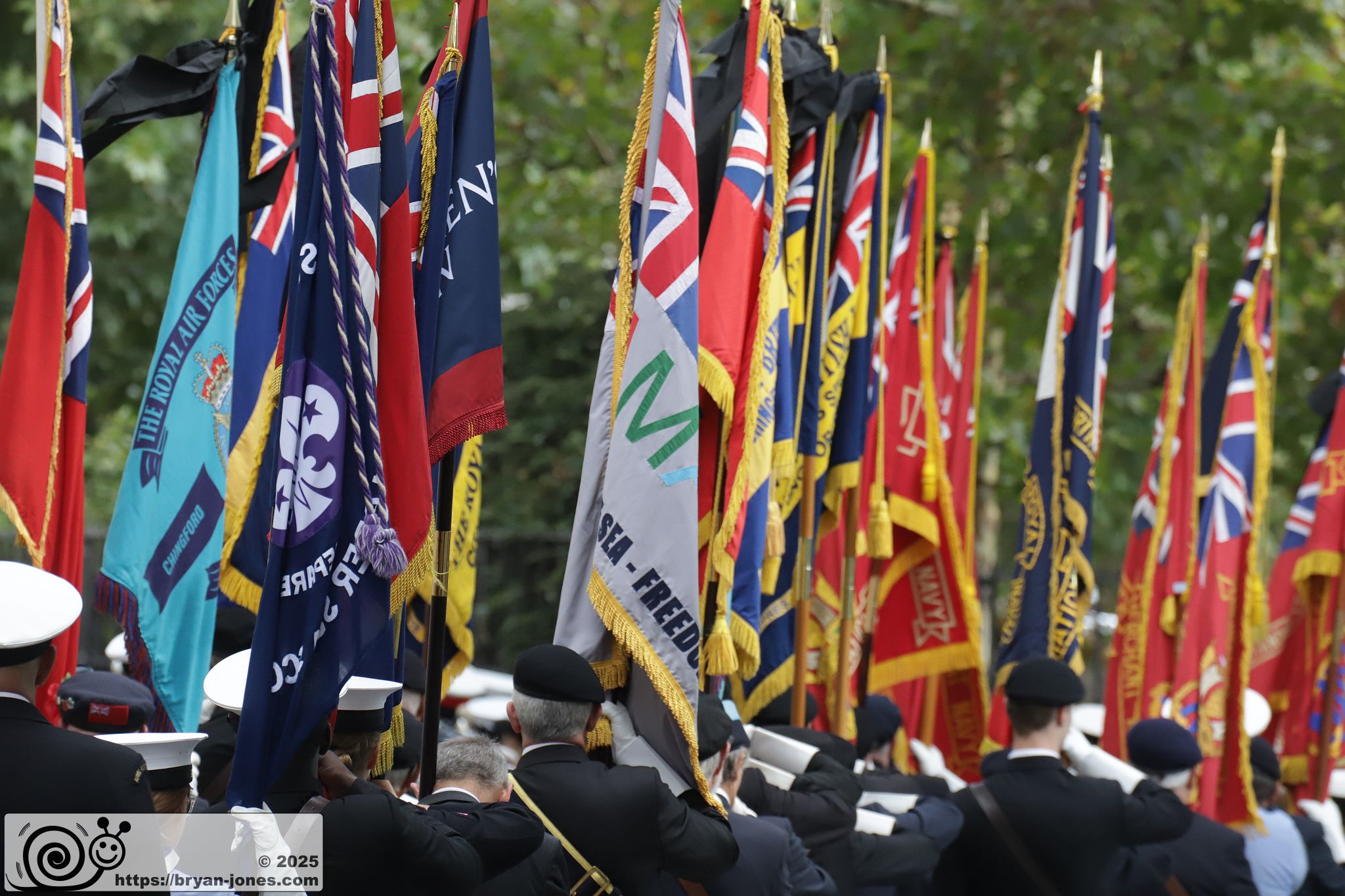
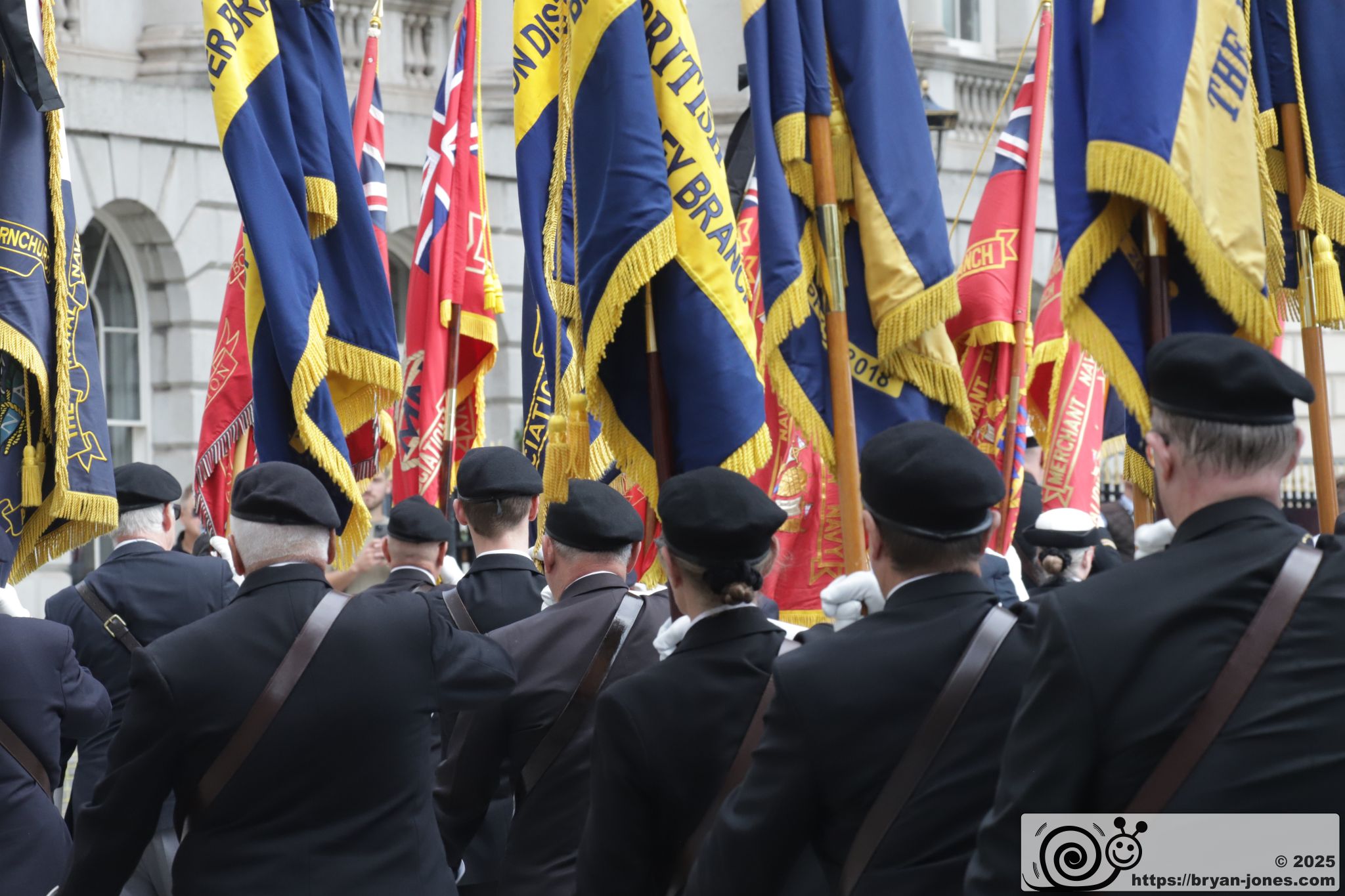
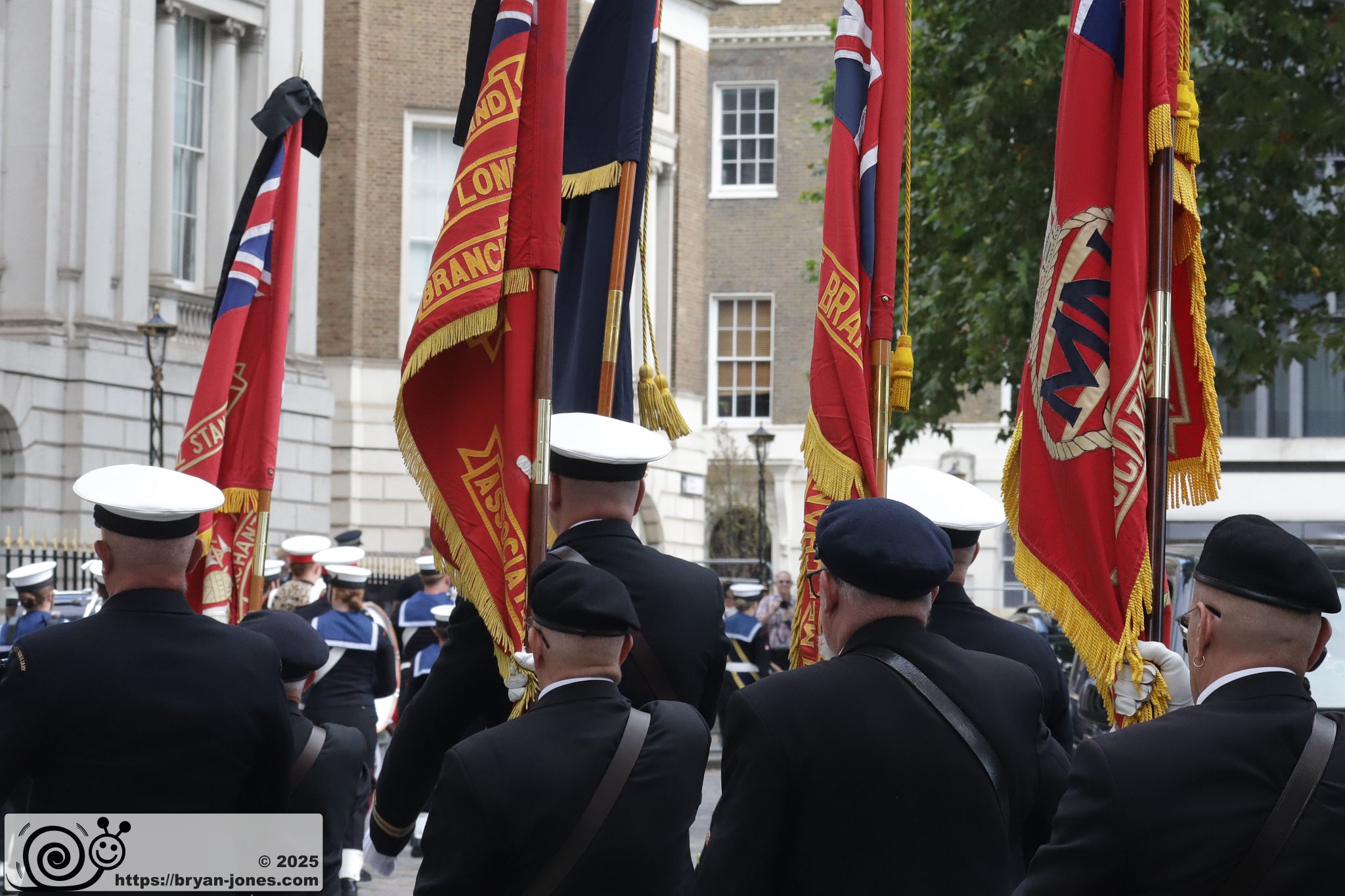
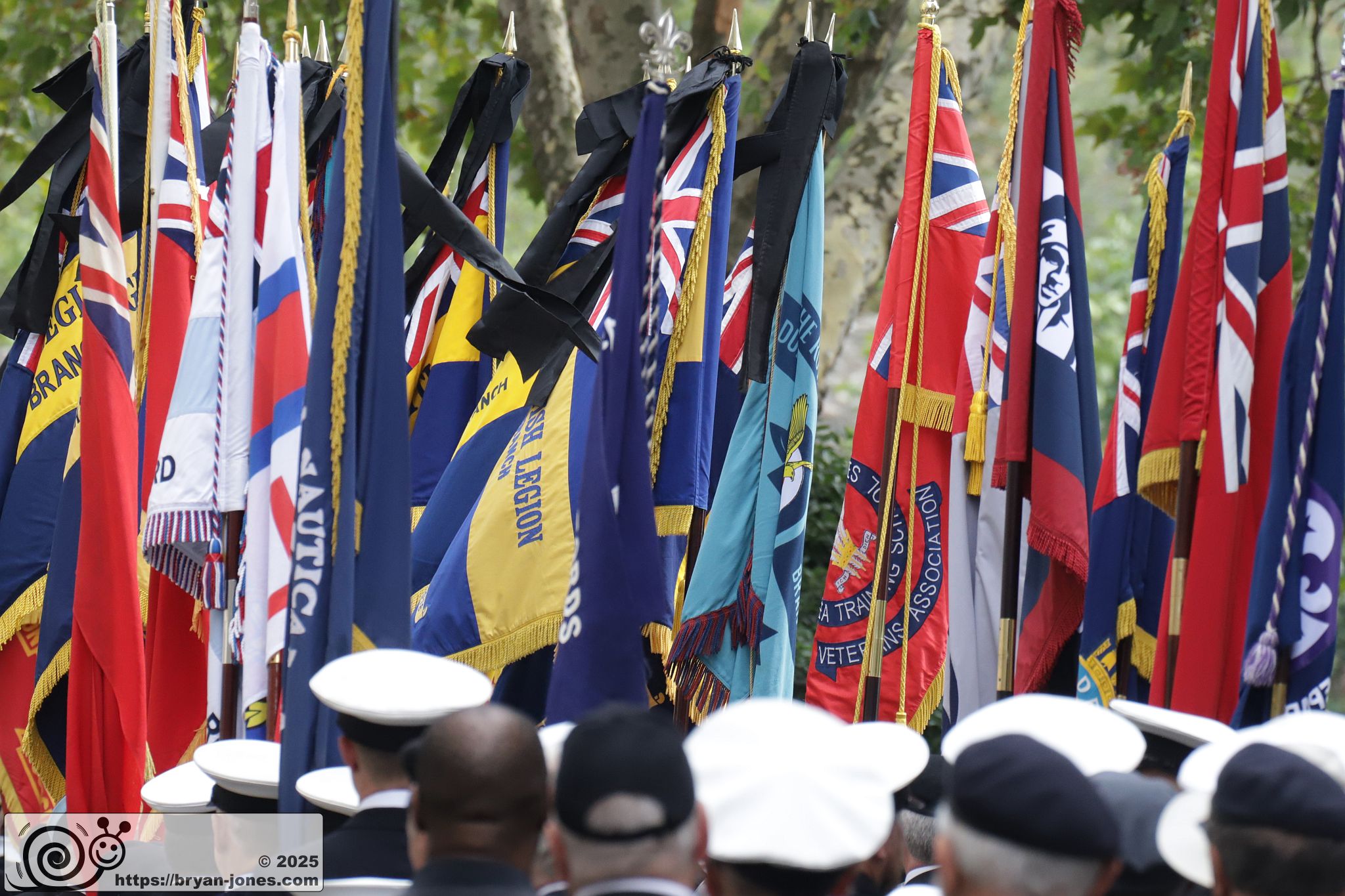
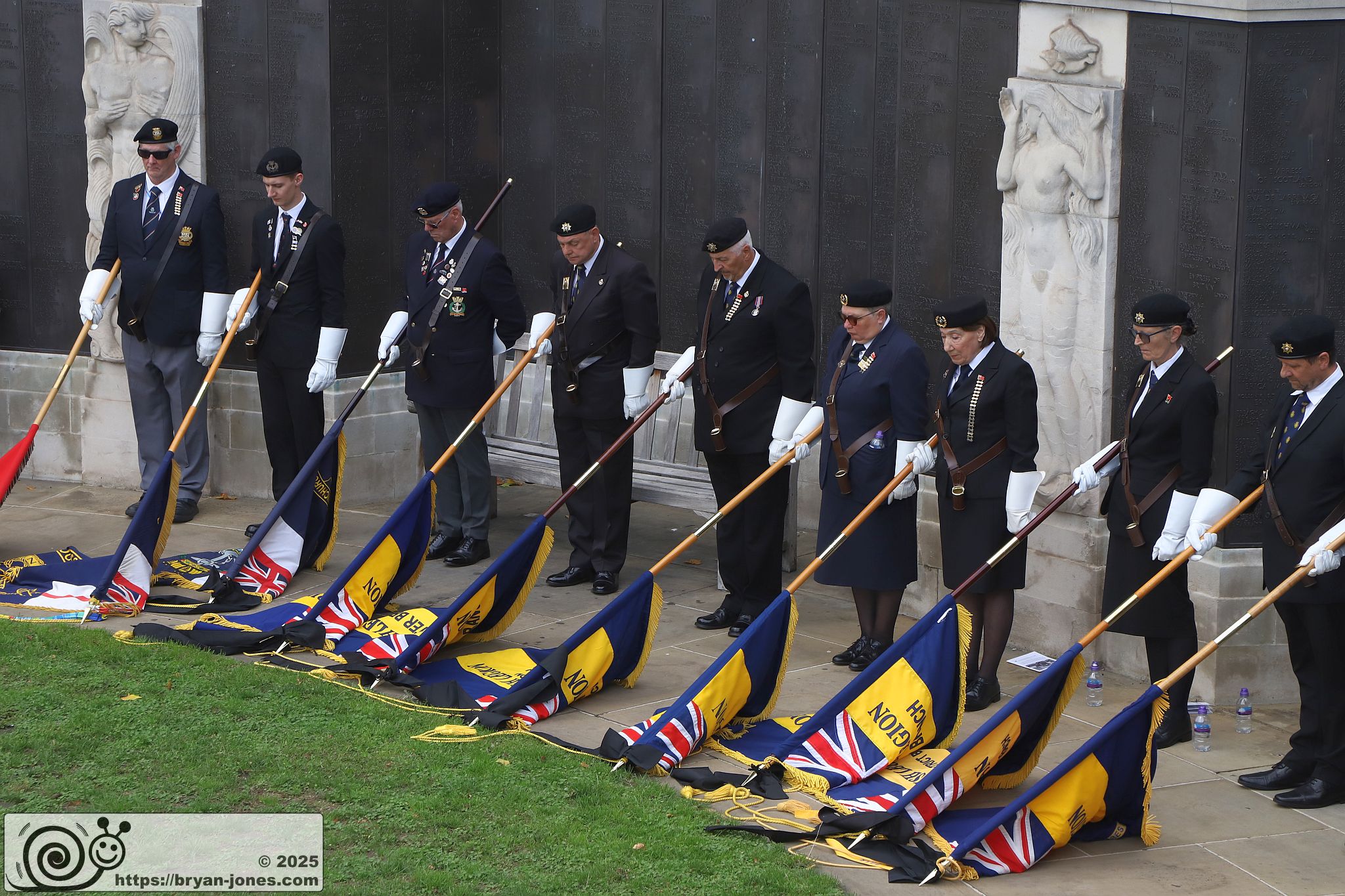
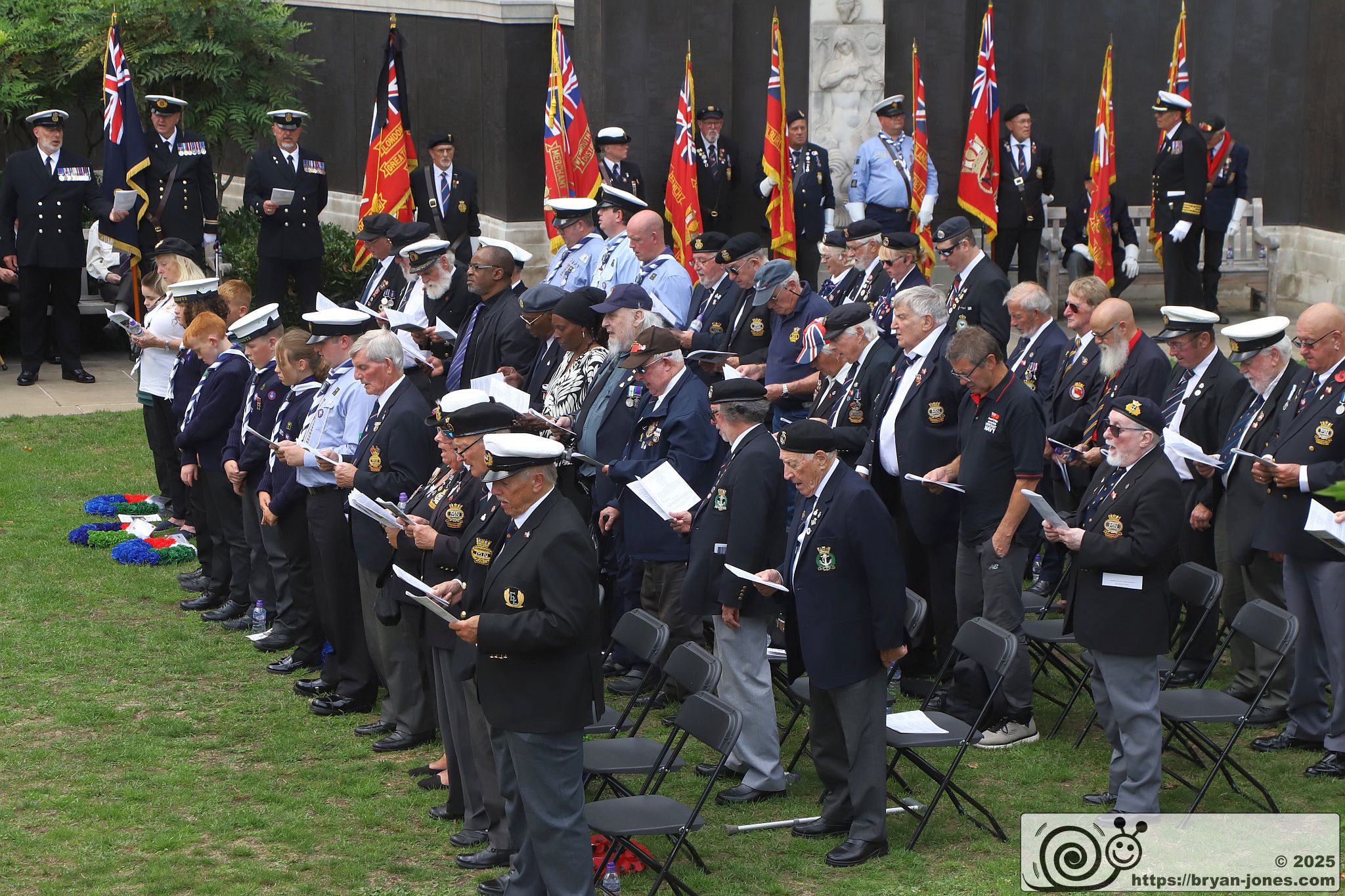
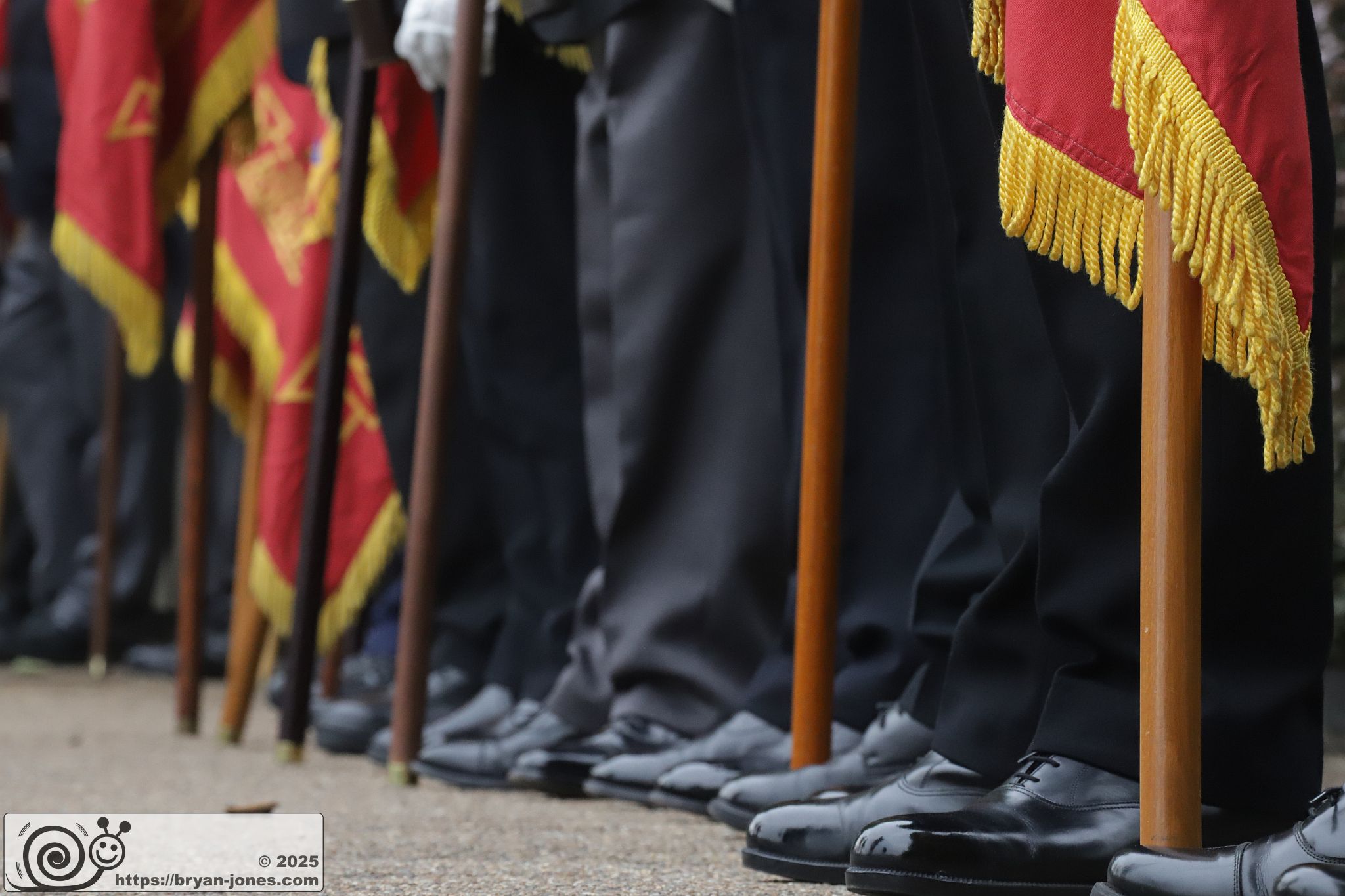
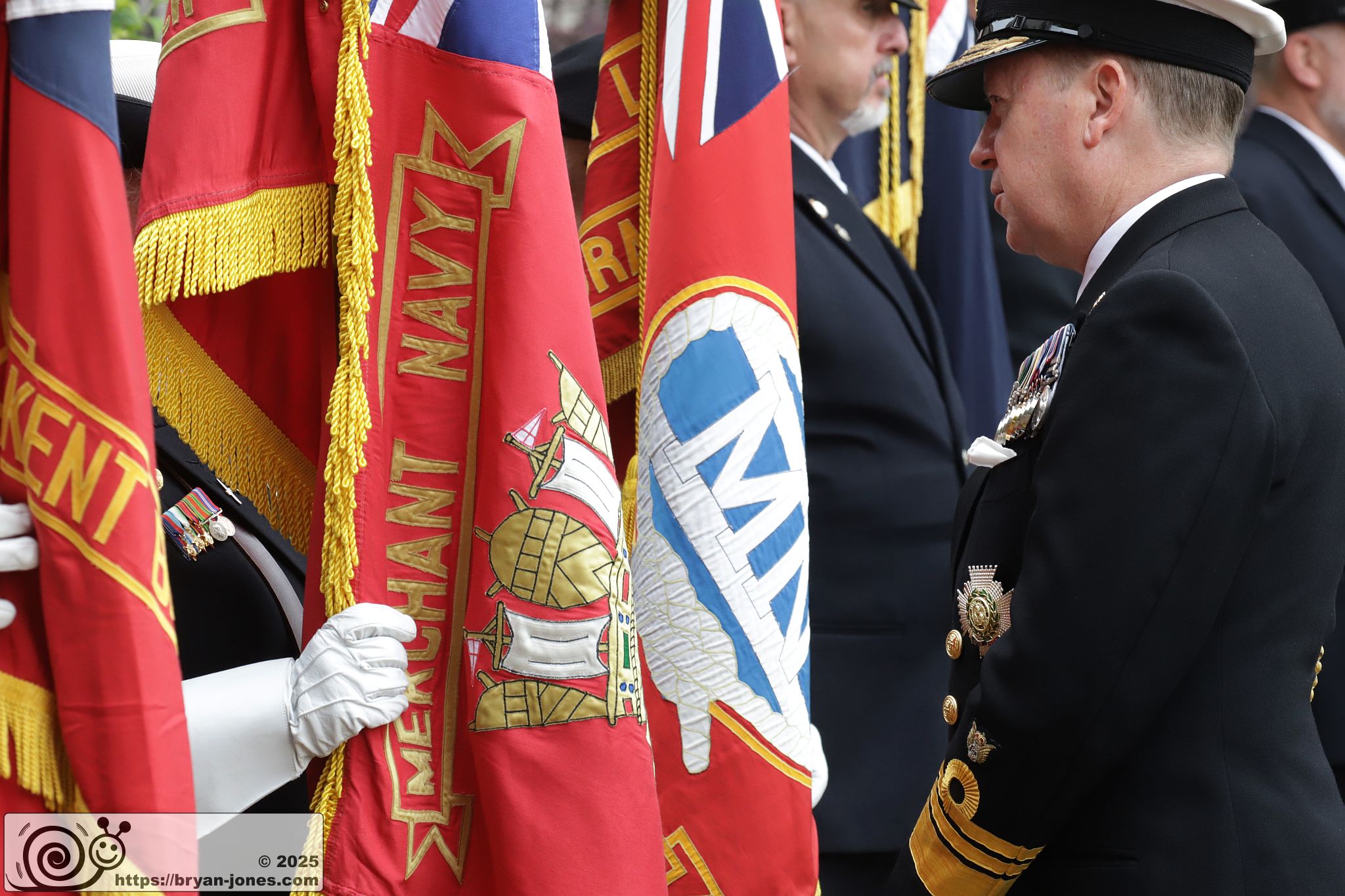
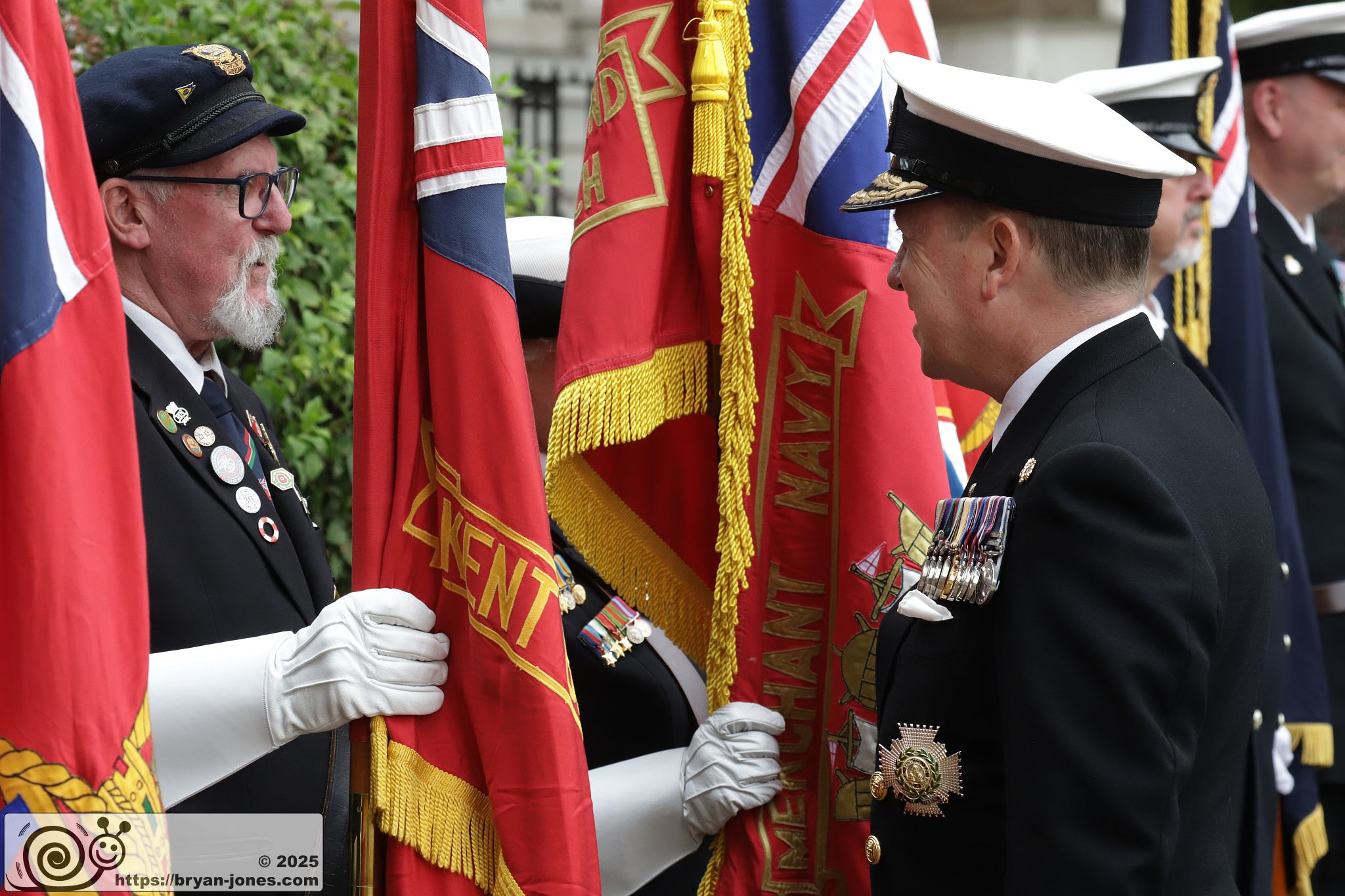
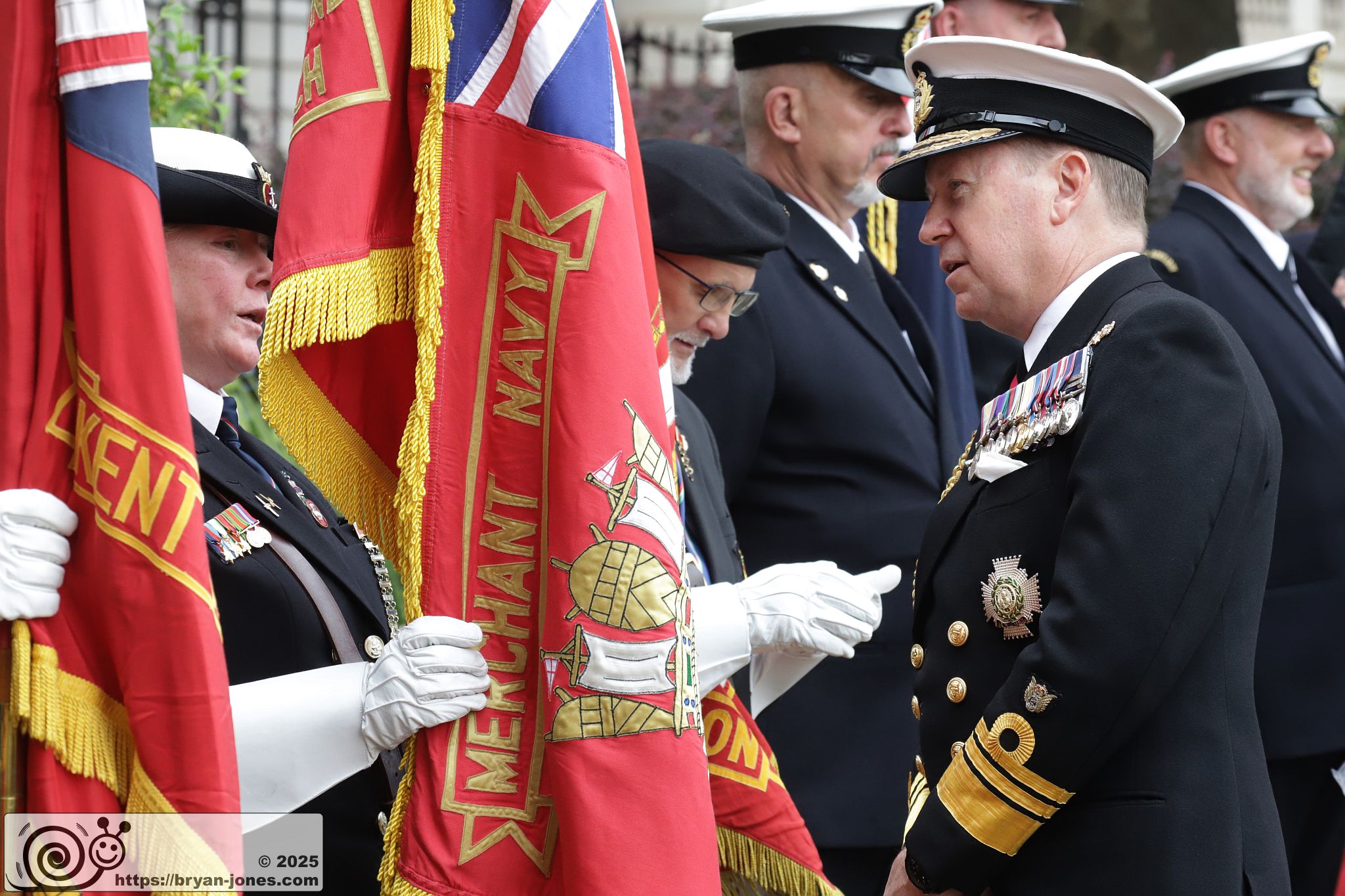
The 2025 Merchant Navy Day Commemorative Service was held on Sunday 7th September with the standards (flags) of the Merchant Navy Association, the Royal British Legion and supporting organisations being paraded accompanied by the band of the Sea Cadets.
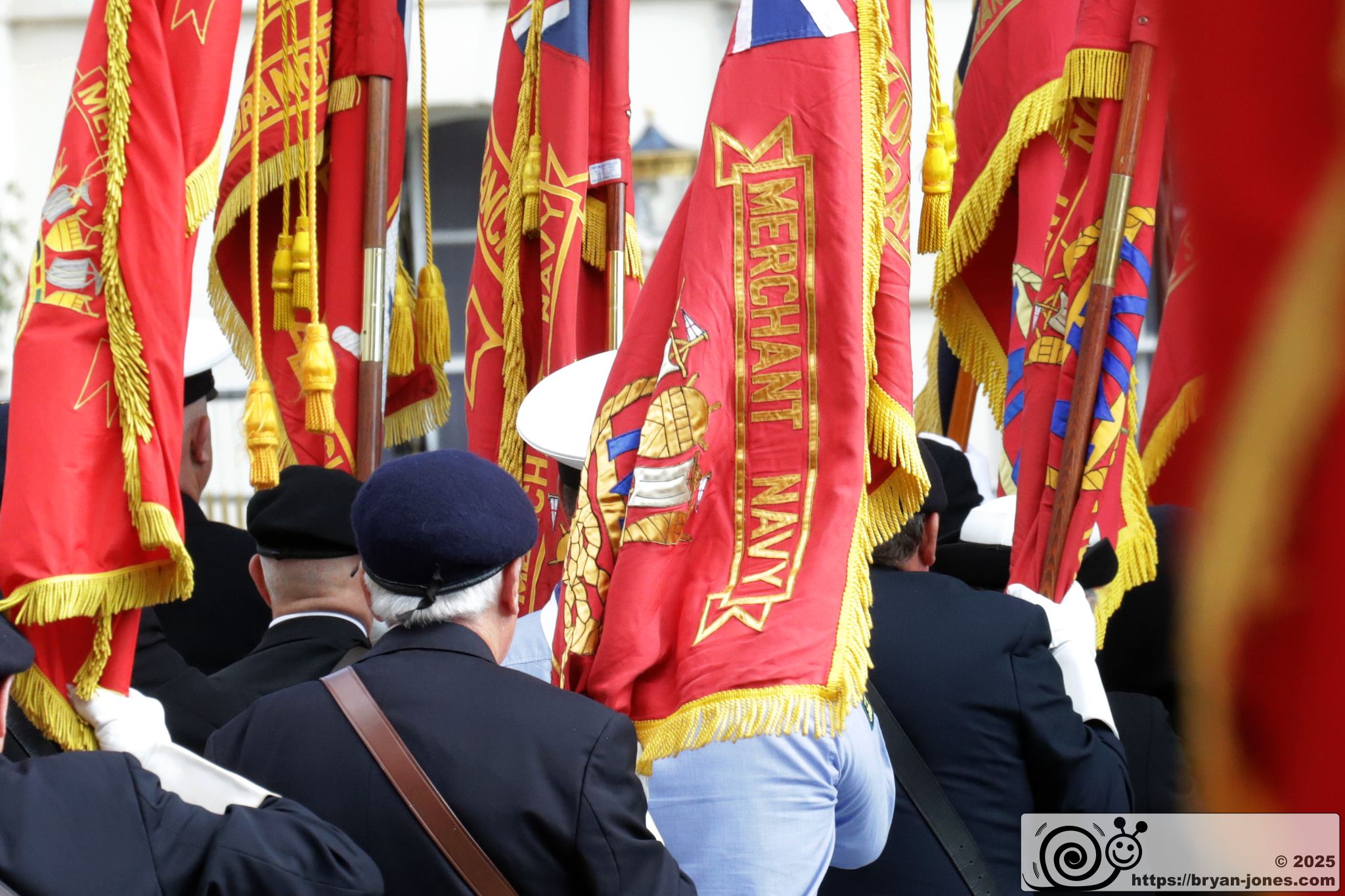
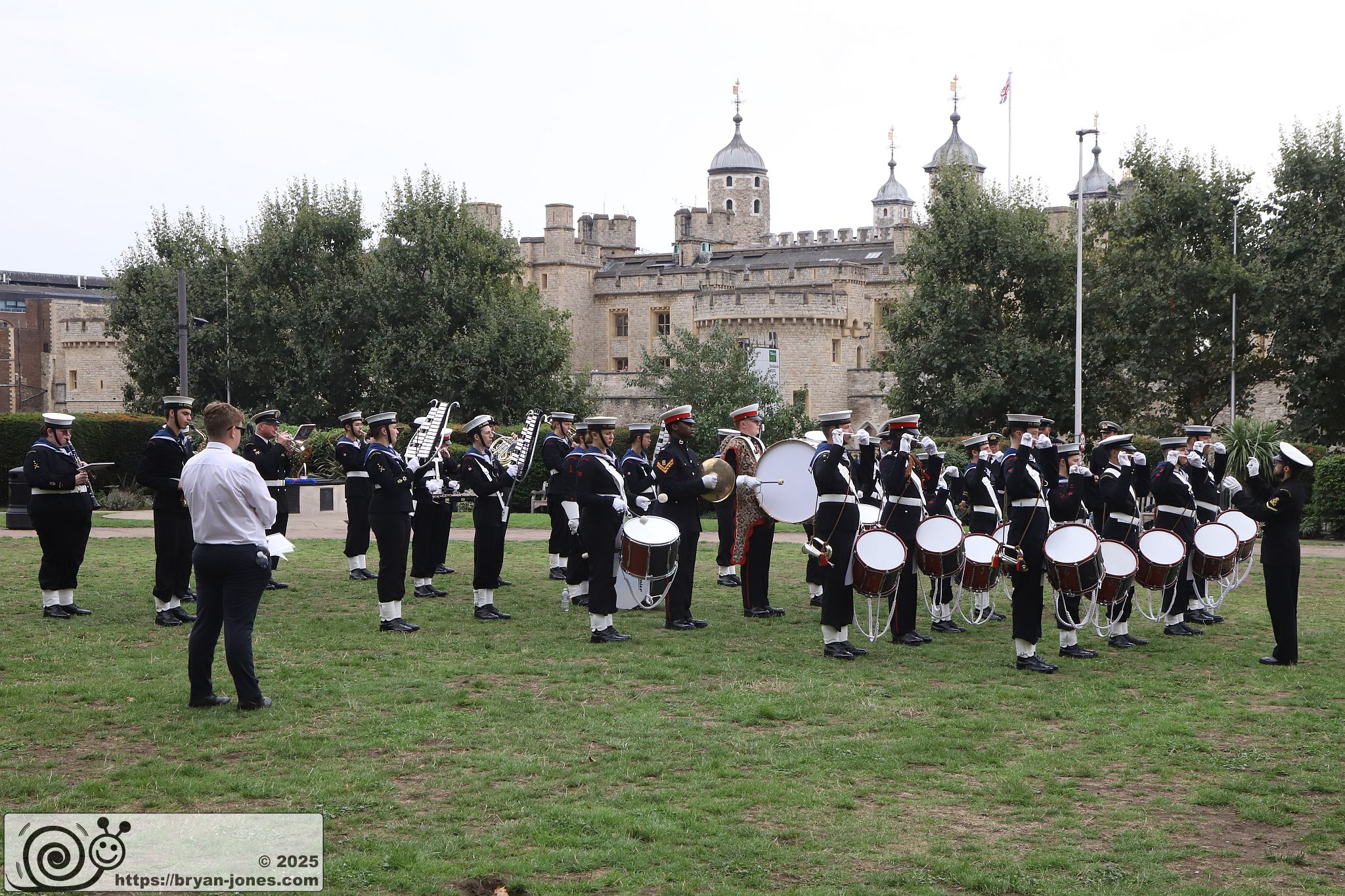
The standards were marched on to Trinity Gardens and down into the sunken garden of the WW2 memorial.
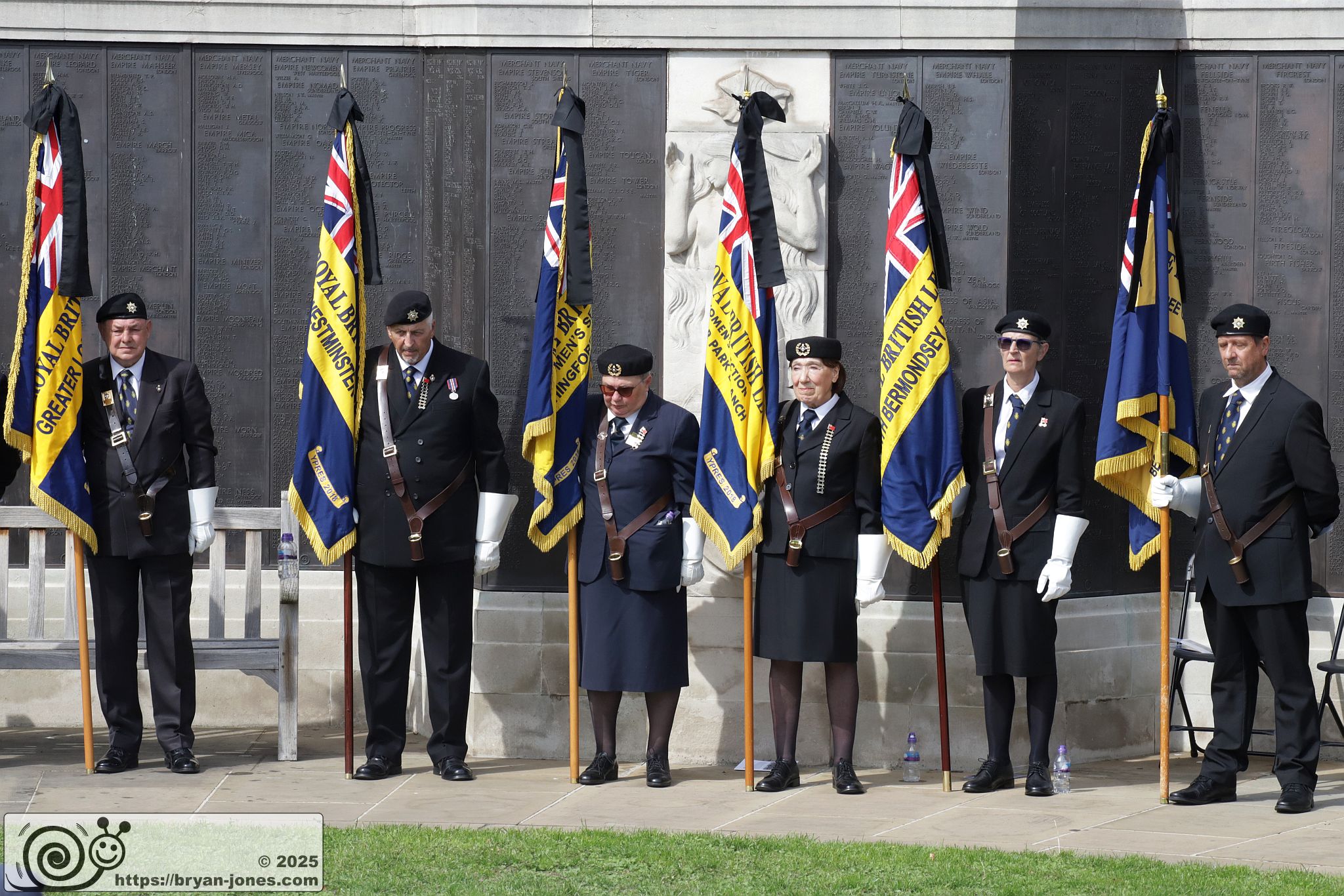
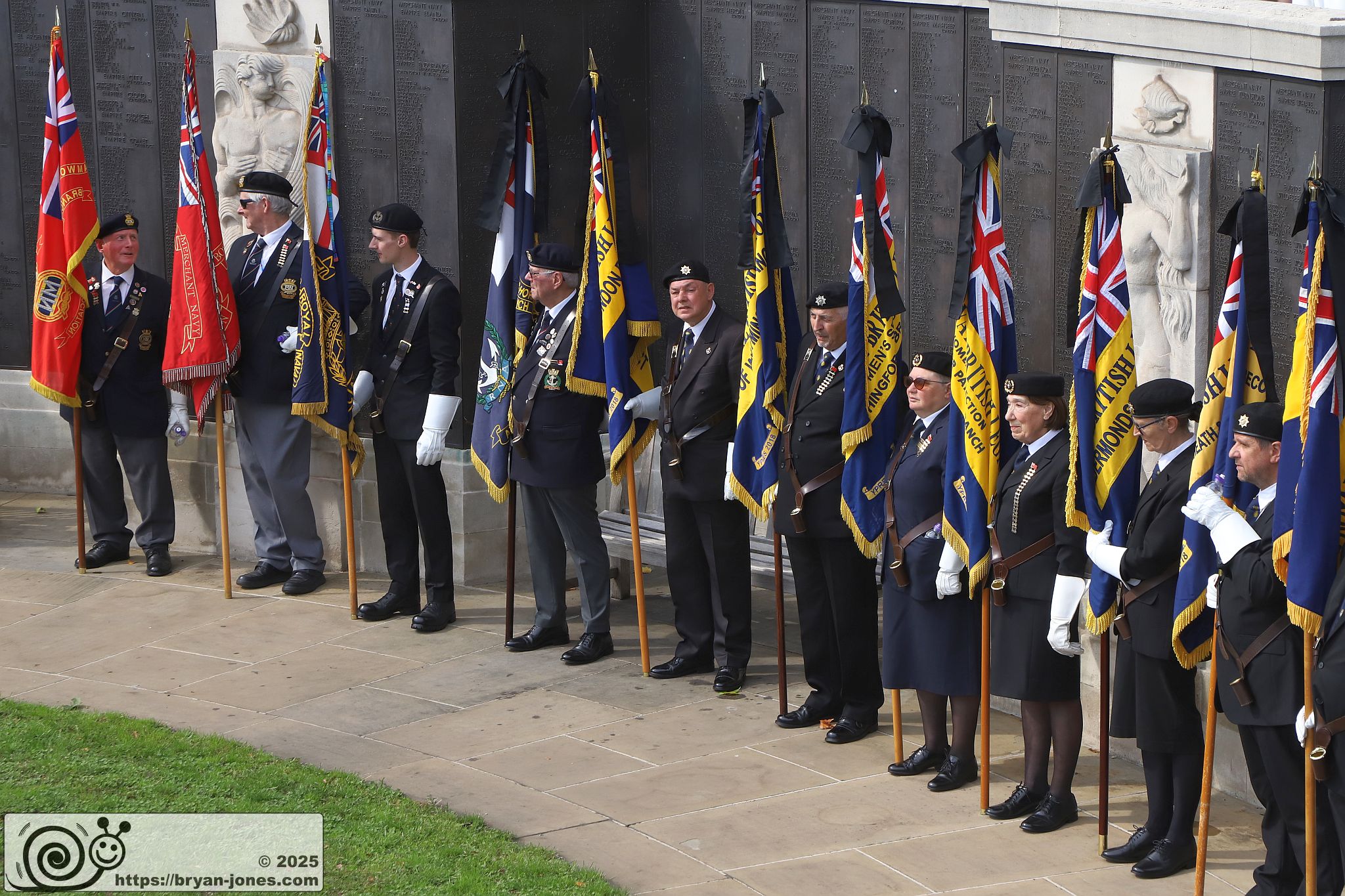
Here they formed up in front of the panels listing the names of ships and those who lost their lives whilst serving on them.
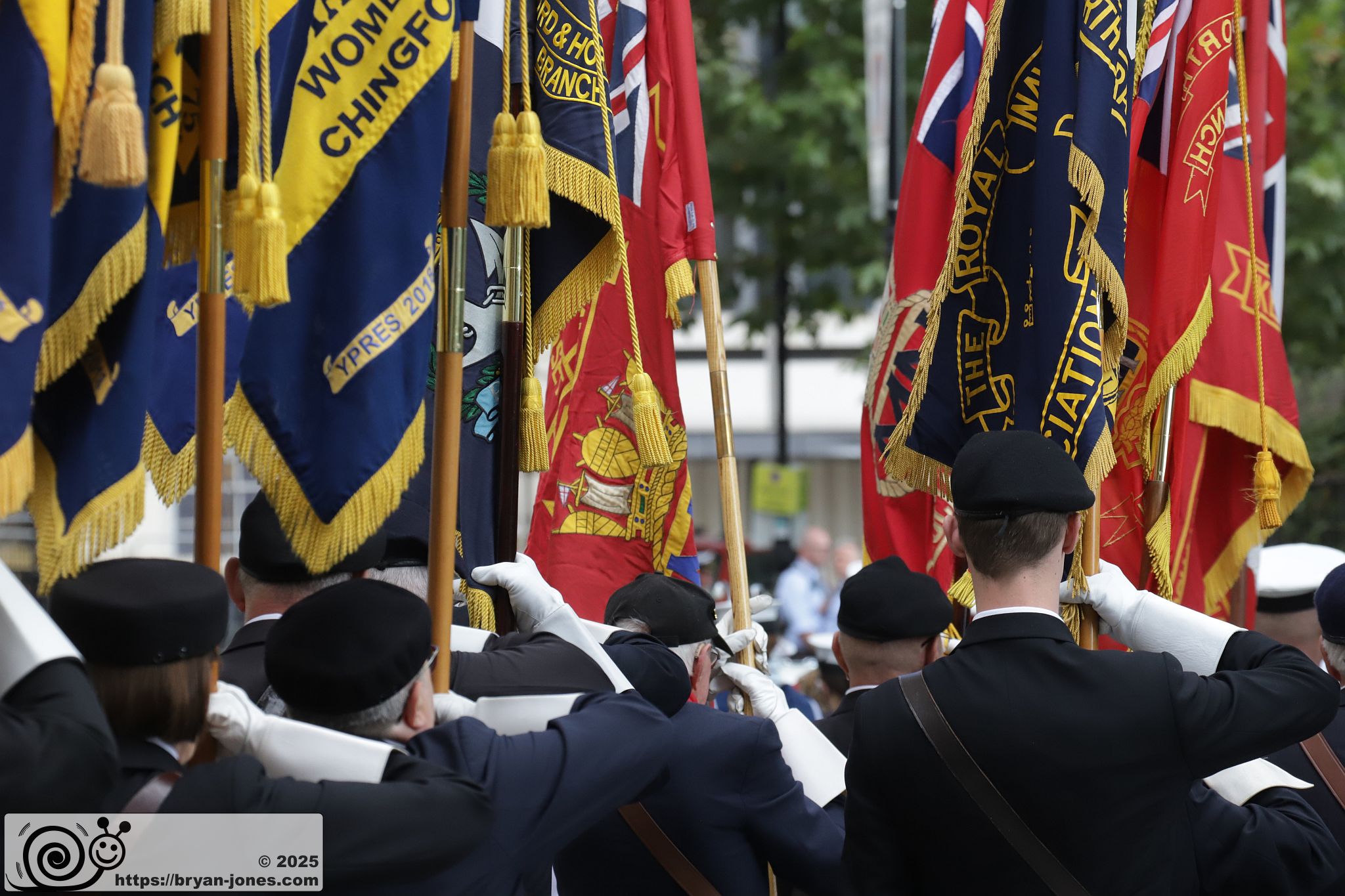
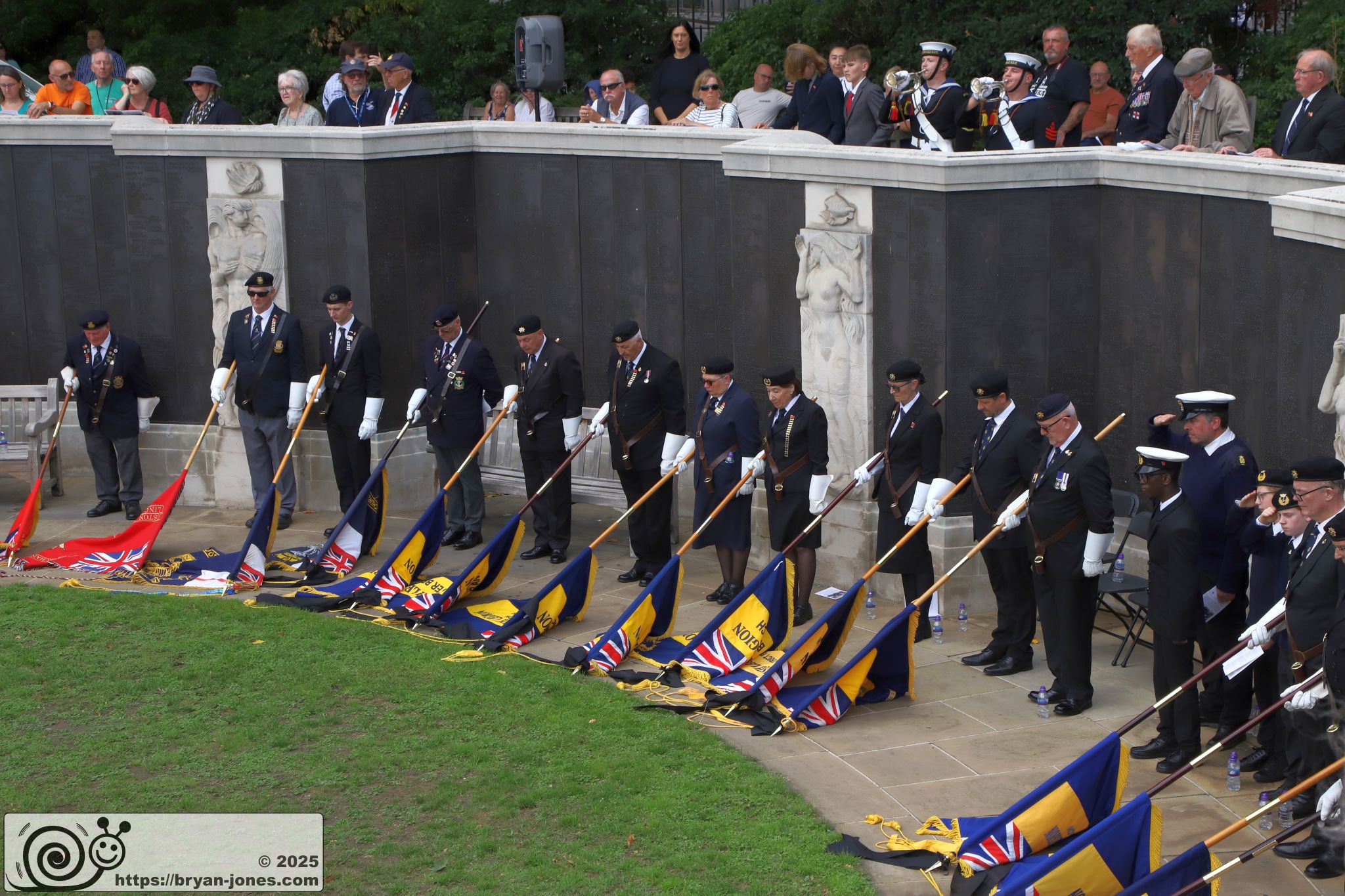
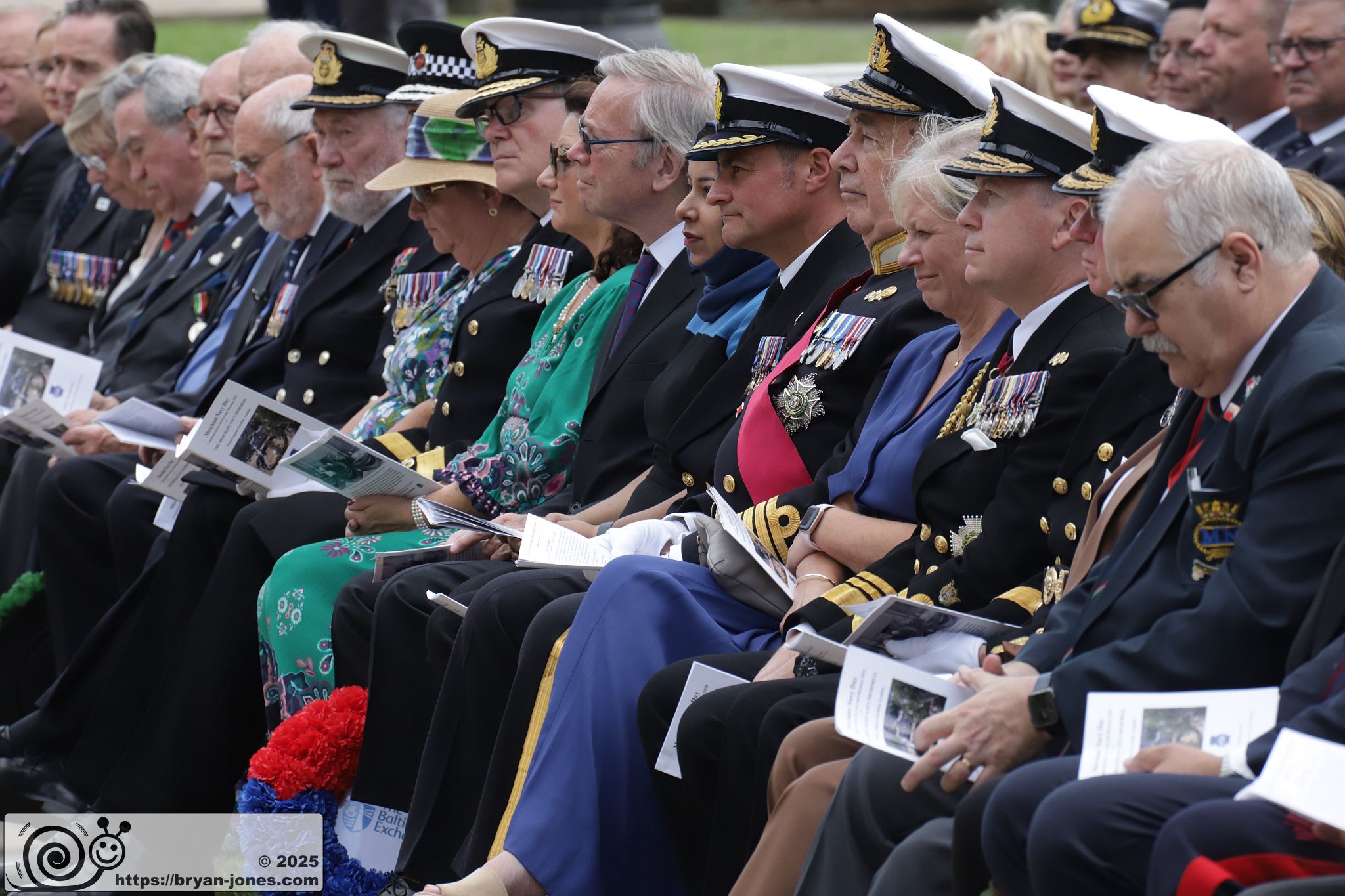
An honour guard from the nearby HMS President were formed up close to the guests. The guests included the the President of the Merchant Navy Association, the Second Sea Lord of the Royal Navy, military attaches from Commonwealth High Commissions and many others with strong links to the sea.
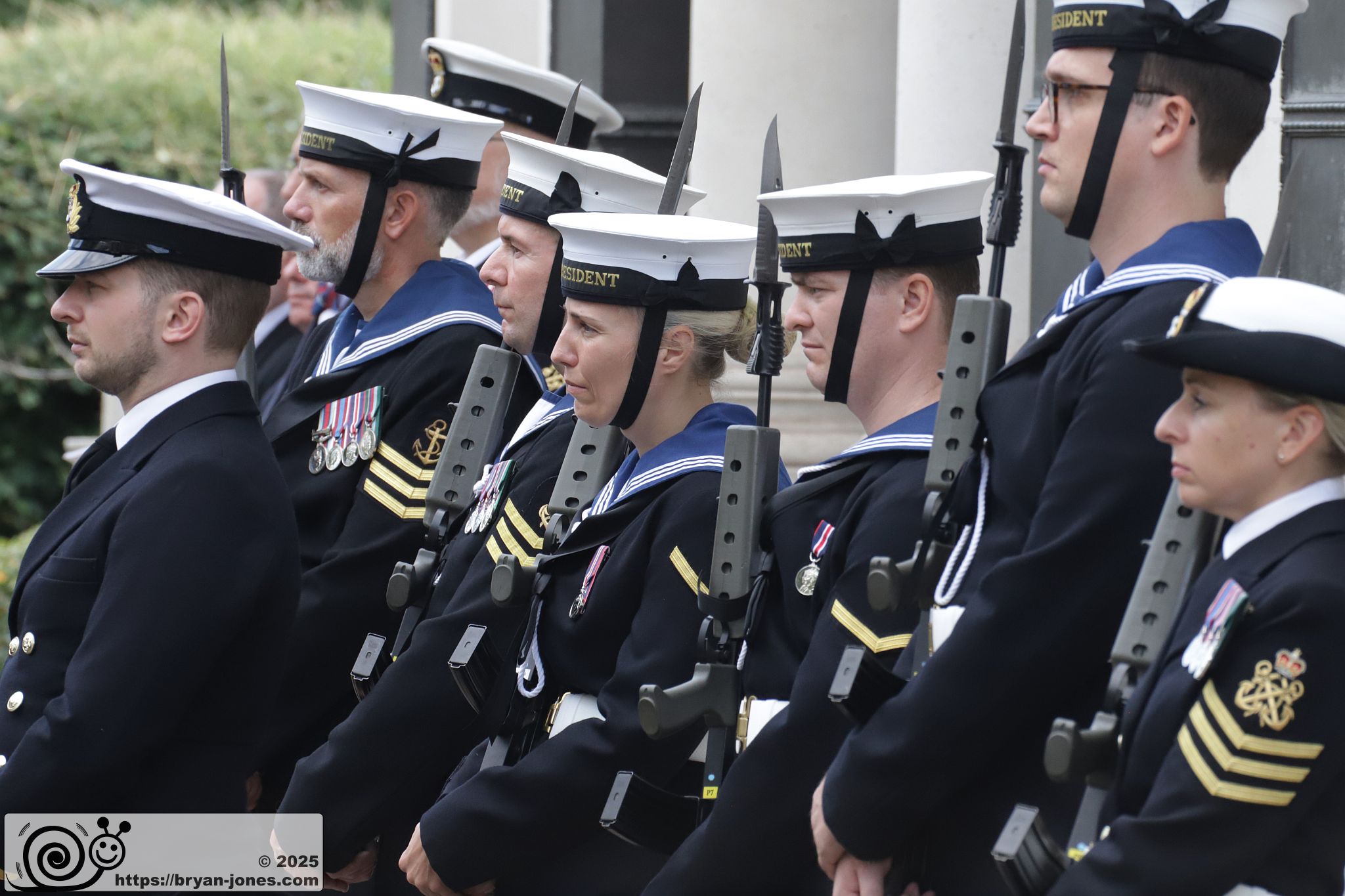
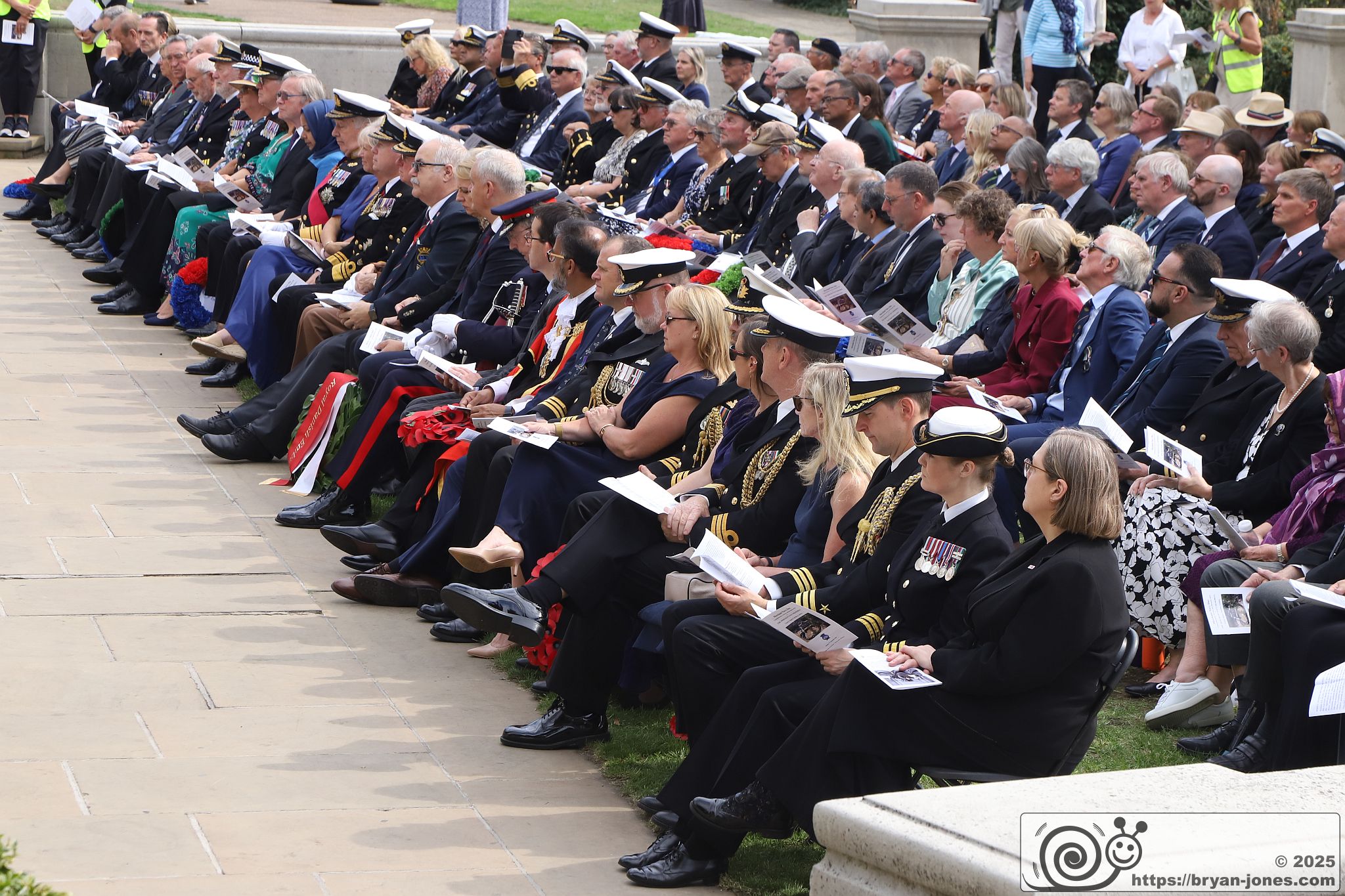
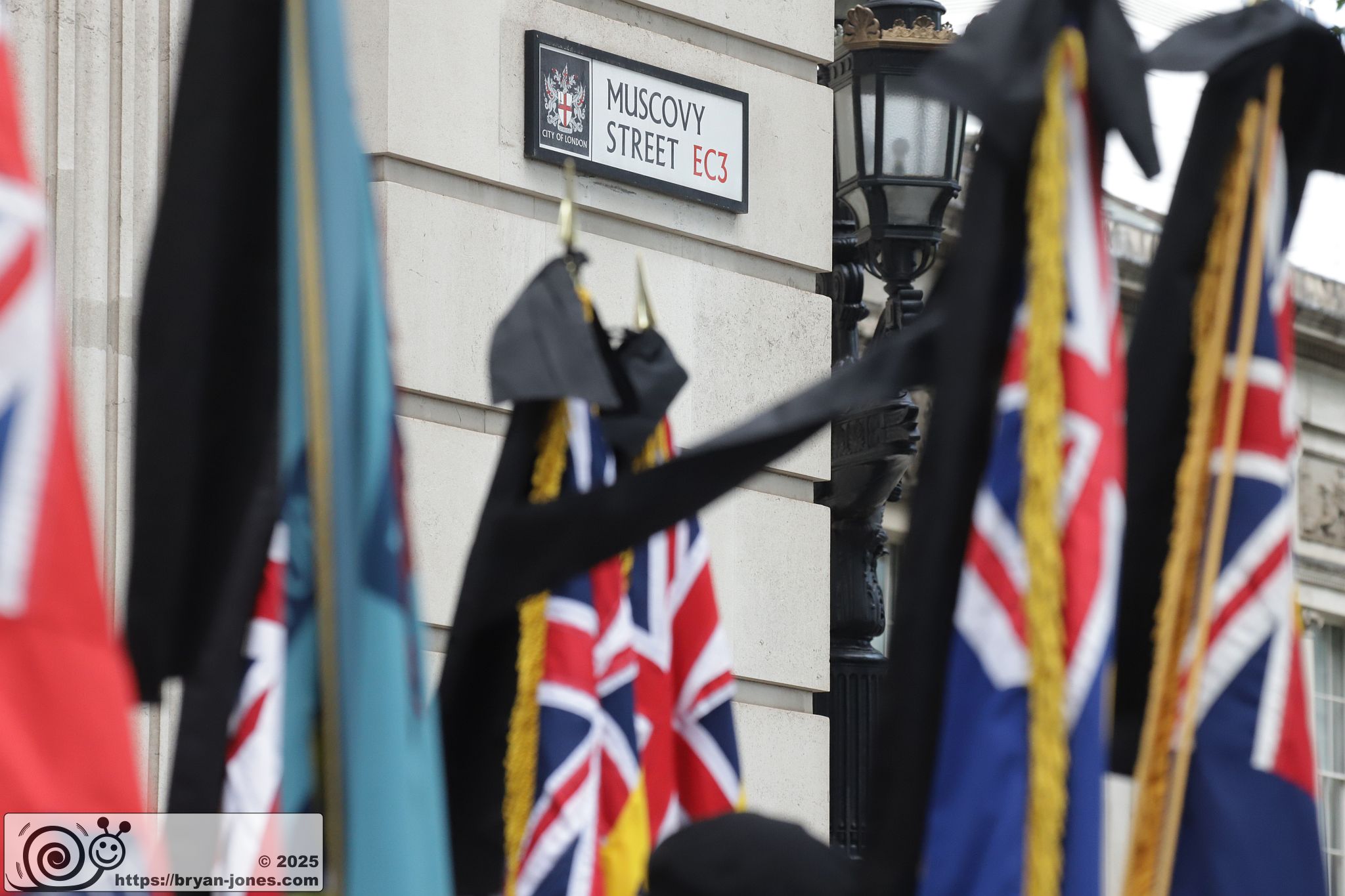
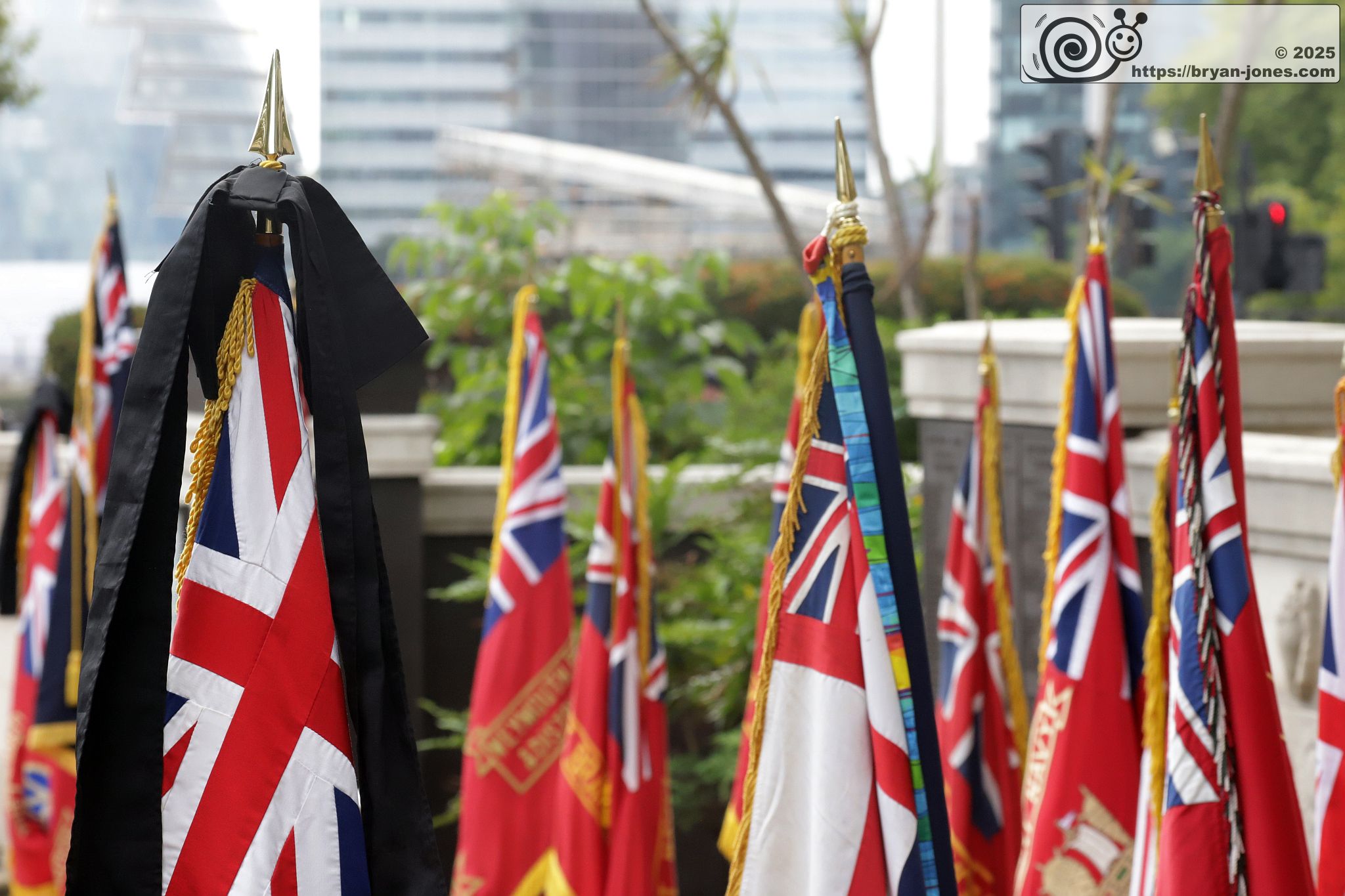
Sunday 7th September 2025, not long after HRH the Duchess of Kent had died, but before her funeral had been held. For that reason, most of the standards (flags) being paraded had black mourning ribbons tied to them.
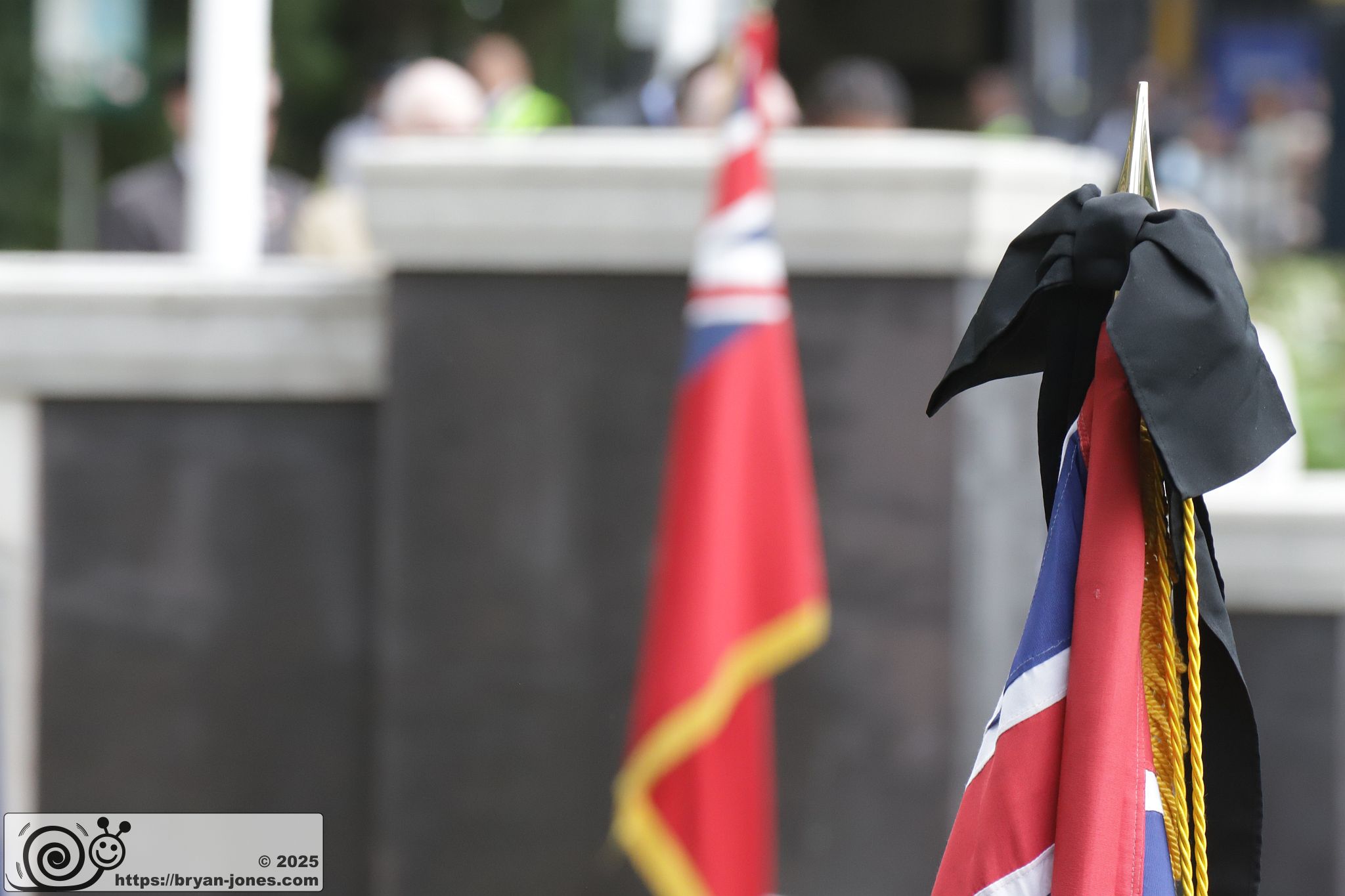
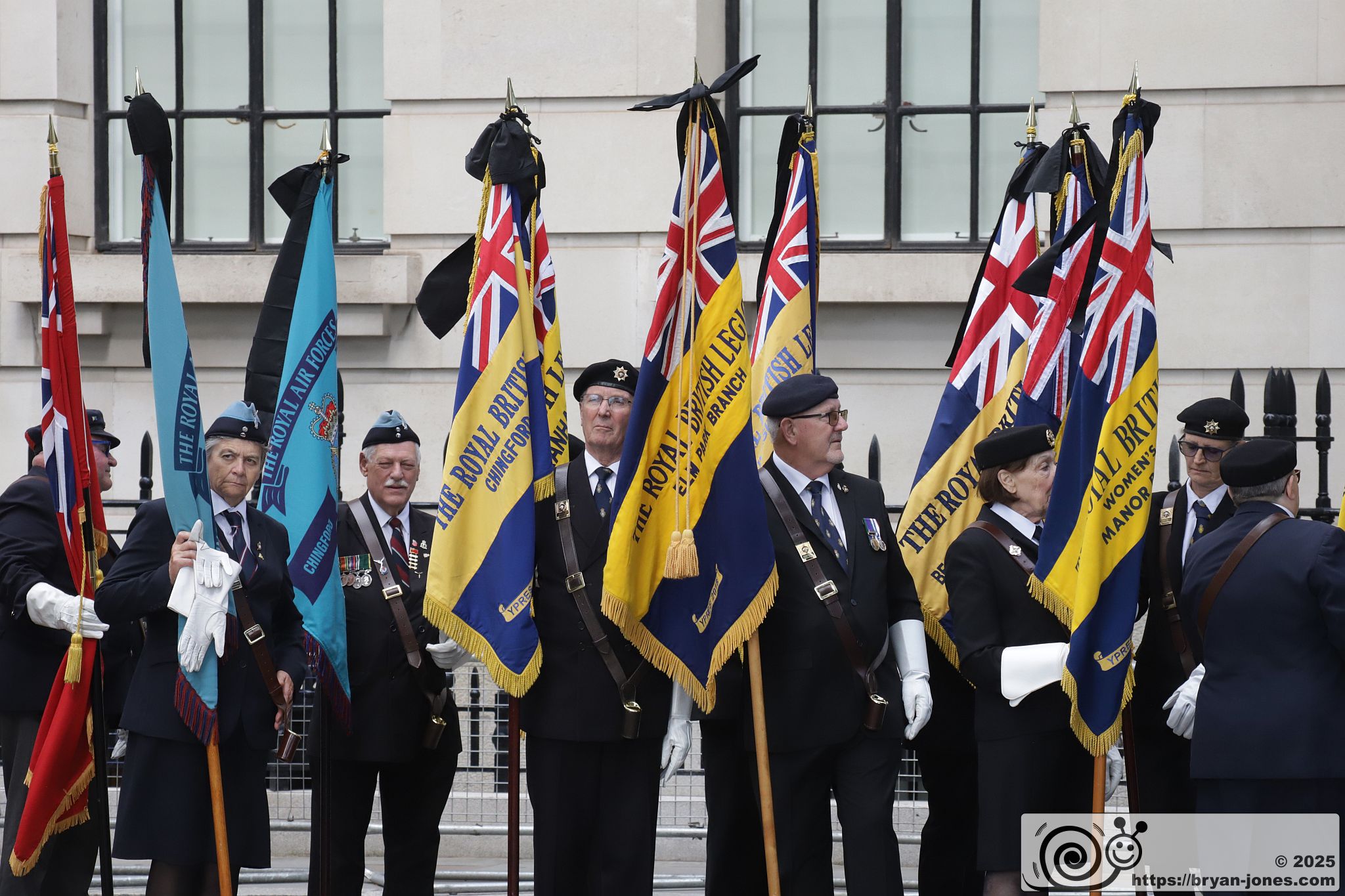
Photo Gallery
More Commercial Ship Posts

Extreme E Support Ship “St Helena” Visits London
The former RMS St Helena, now Extreme E Racing’s support ship, sailed up the River Thames through Tower Bridge to visit London on 26-Jun-2024

RRS Sir David Attenborough Passes Woolwich
The RRS Sir David Attenborough is operated by the British Antarctic Survey and was seen passing Woolwich in filthy weather on 31-Oct-2021.

Aggregate Carrier Bert Prior In Deptford
Bert Prior, an aggregate carrier on the River Thames, photographed leaving Deptford Creek on the River Thames to pickup another load.

Thames Vitality Oxygenation Boat
The Thames Water Vitality and Bubbler boats oxygenate the River Thames when sewage is released untreated into the River Thames.

Cargo Ship Fure Vinga Visits London
The Swedish cargo ship “Fure Vinga” was an unusual sight to be seen tied up alongside HMS Belfast in early June 2022.

Trinity House Vessel Galatea Sails Up The Thames
Trinity House Vessel Galatea Sails Up The Thames on 03-Sep-2023 and passes through Tower Bridge to visit London.

General Cargo Ship “Fast Julia”
On 24th March 2018, the general cargo ship “Fast Julia” passed downstream on the River Thames through London.